
49001200219B Common Rail Fuel Pump for Doosan D18 and D24
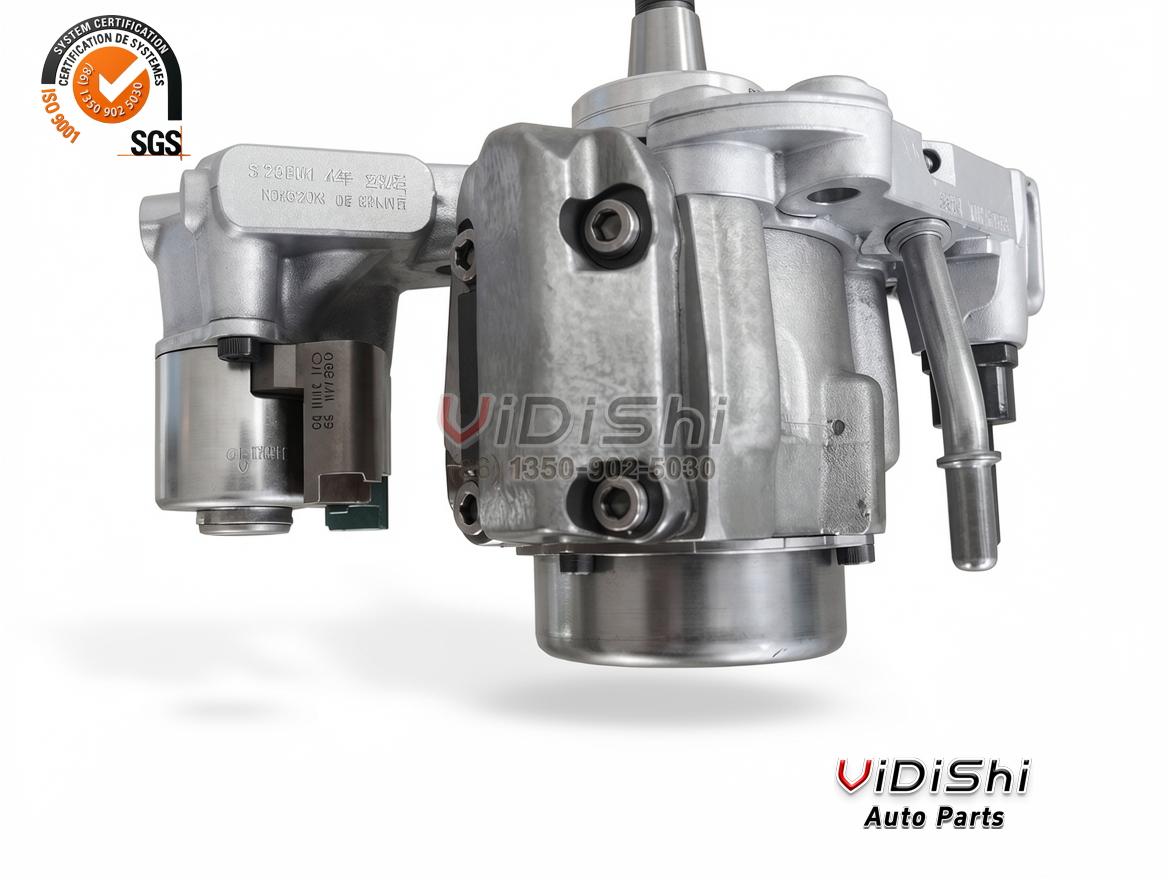
New 490012-00219B complete high pressure common rail fuel injection pump for the Doosan D18 1.8L and D24 2.4L diesel engines. High pressure section, transfer pump with metering valve, drive spline, electrical connector and pipe ports as one unit. Doosan OE number 400912-00219B on the label; Delphi reference 28526888 and Bobcat reference 7249380, since published as 7516847, name the same pump. Injectors, common rail, controller and gasket set are not included. Maximum rail pressure and control voltage are not published for this number. A Vidishi Auto compatible replacement, not a Delphi-branded part, with a 12-month warranty against manufacturing defects. Single package 46x36x32 cm and 9.0 kg gross are packing estimates. MOQ 1 pc.
Original price was: $571.00.$560.00Current price is: $560.00.
100% Secure Checkout
Free Shipping Over $1099
Customer Satisfaction
International Shipping
Product Specifications
| Weight | 9 kg |
|---|---|
| Dimensions | 46 × 36 × 32 cm |
| make | |
| model | |
| engine | Common rail high pressure fuel injection, four stroke diesel, Doosan D18 1.8 L three cylinder, Doosan D24 2.4 L in-line four cylinder |
| position |
Product Details
Supply highlights
The commercial numbers that decide the order, for a pump supplied new from a one-piece minimum with no core return.
Fitment verification in four steps
The application is published for this pump, so the check is quicker than on a part with no fitment data — but on a pump it is also more exacting, because the number has to be right and not merely close.
| Step | What to look at | What it proves |
|---|---|---|
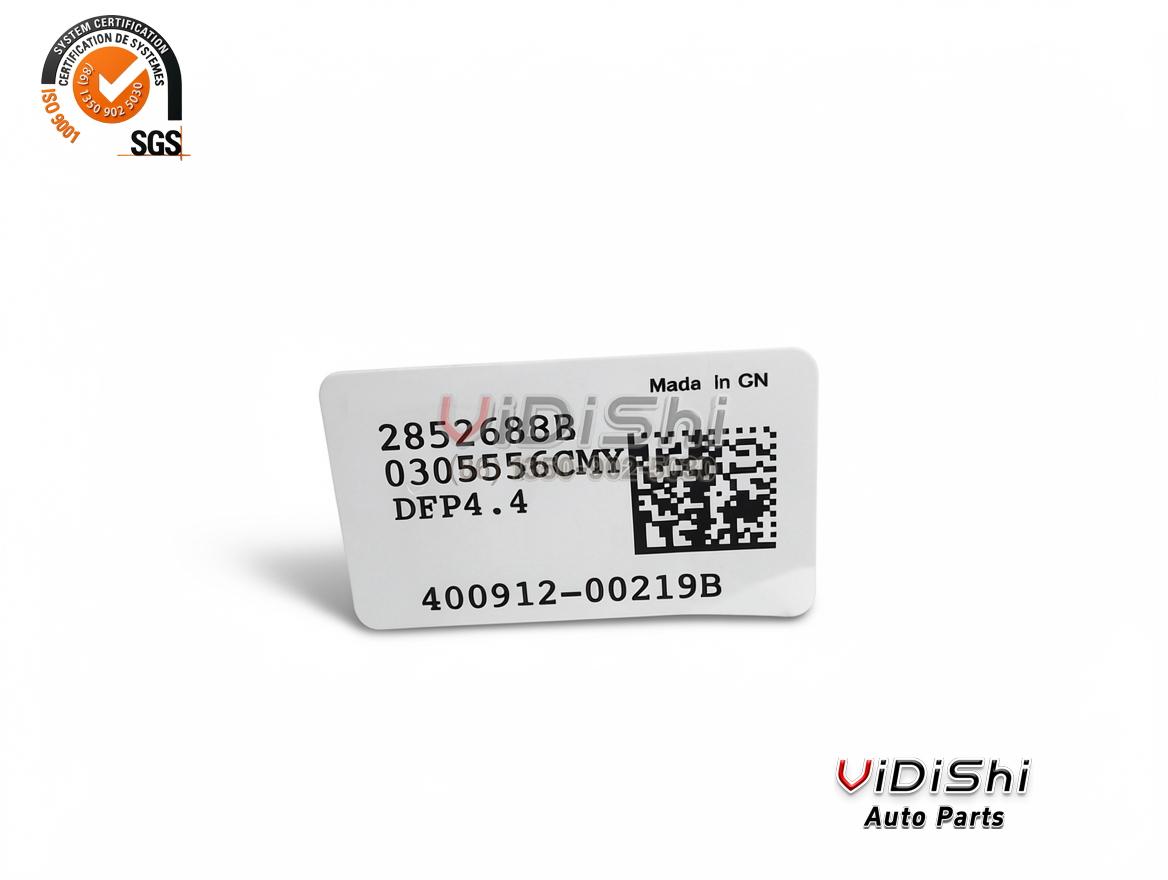
| 1. Read the label on the unit | The sticker attached to the pump body | Confirms the part: 400912-00219B is printed on it |
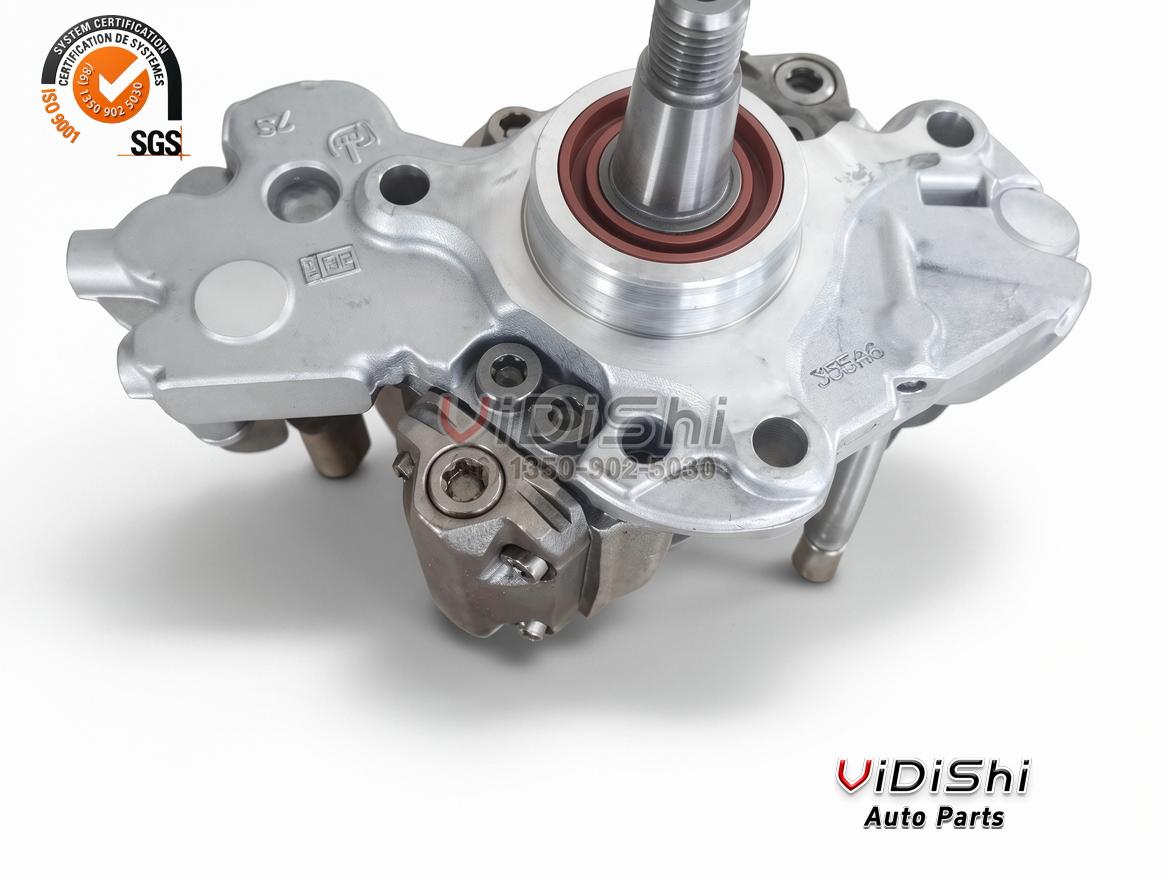
| 2. Read the casting on the housing | The raised digits on the pump body flank | Confirms the same unit rather than a neighbouring number |
| 3. Photograph the engine code plate | The plate on the engine or in the machine records | Rules the D18 and the D24, and anything else, in or out |
| 4. Send the fuel line connectors | A photograph of the pipe ports and the connector | Confirms the physical unit against the one coming off |
The applications published against this pump are the machines built around the Doosan D18 of 1.8 litres and the Doosan D24 of 2.4 litres. Both are four stroke diesel engines, and published engine data gives the D18 as a 1.8 litre three cylinder and the D24 as a 2.4 litre in-line four cylinder, with the same 90 by 94 mm bore and stroke quoted for the pair. The machine coverage carried in the parts catalogues sits with the Bobcat compact excavators E32, E35, E42, E45, E50, E55 and E85, the skid steer loaders S450 through S650, the track loaders T450 through T650 and the Toolcat 5600 and 5610, plus a spread of Doosan forklift applications. Those attributions are catalogue data rather than build records, so we hold them as reference and confirm each one against the plate.
The DX60-9C mini excavator in the source listing is a Doosan machine published with a D24C engine of 2.4 litres and four cylinders, which places it inside the D24 half of that engine family by displacement and by cylinder count. We name it because the source listing names it, and we hold it as a machine-level attribution rather than as a catalogue entry in its own right: no Bobcat or Doosan parts document we can check lists the DX60-9C against this pump number. If that is the machine in front of you, the engine plate is the document that settles it, and the D24C engine it carries is what we would expect to see.
What the published application covers, what it excludes, and the one label to read. The Engine application published for this pump is the D18 1.8 litre and the D24 2.4 litre. The Label on the unit is the one identification point that settles every other question, because it carries the Doosan OE number and the housing number on the same sticker. Read it before anything else, and photograph it before the old pump comes off the machine, because once the pump is in a bin the label is much harder to read than the casting.
Why the removed pump matters more than the model list. A common rail pump of this family was fitted across several Bobcat model families and Doosan machine classes over a long production run, and both engine codes were carried forward into later machines with the fuel system revised around them. Two machines holding the same model badge can take different pumps, a machine that has had its rail or its injectors replaced can differ again from a stock example, and we do not publish build years we cannot evidence. The label and the casting are the ground truth: they carry the part identity and they survive long after the paperwork is gone. Match those, check the connectors, then order.
What this page is not claiming. We are not saying that any neighbouring number in the same family fits, that a pump for a different engine code can be adapted, that the published machine applications are covered without a plate check, or that a pump from another fuel system substitutes. Numbers close to this one in the same catalogues describe different pumps for different engines, and we name none of them here because printing them invites an interchange we do not support. 490012-00219B is the pump for the cross reference applications published against it, and 400912-00219B, 28526888 and 7249380 all name that same pump on those machines.
What a high pressure common rail pump does, and why it is four parts in one casting
A plain-language look at the unit, the numbers on it, and why it is so often mistaken for something smaller.
A common rail diesel splits the fuel system into two halves that used to be one. On the low pressure side there is a tank, a filter, a water separator and the transfer pump, which does nothing more than lift fuel from the tank and push it forward at modest pressure. On the high pressure side there is the high pressure pump, and that is the part on this page: it takes the low pressure fuel arriving at its inlet and forces it, at far higher pressure, into a rigid common rail that runs the length of the engine. The injectors downstream of that rail take whatever pressure they find and use it to atomise the fuel for each cylinder in turn. The engine never sees a mechanical cam and a delivery valve per cylinder any more. It sees a rail at a stable pressure and a controller deciding when each injector opens.
Three separate jobs therefore sit inside the one casting you are buying, and a buyer who does not know that will misunderstand both the part and the price. The high pressure pumping section inside generates rail pressure and is the part that actually wears. The transfer pump, often called the feed or supply pump inside the same housing, draws the low pressure fuel in and has a metering valve on it that regulates how much fuel the high pressure side is allowed to take, which is how the controller holds rail pressure steady across the load range. And the electrical connector and its solenoid give the controller two things it needs: a fuel cut at shutdown, and a control input. A pump on a common rail engine that has a good high pressure section and a tired metering valve will still produce a fault code and still run badly, which is why the two are supplied as one unit rather than as serviceable pieces.
The pressure the pump makes is the reason the whole assembly is heavy and the reason the failures are expensive. Rail pressure on this class of engine is measured in thousands of psi, and the cast iron or aluminium housing, the drive spline, the bearings and the sealing faces between the low and high pressure sides are all built around that figure. A housing that has been run dry, or with water in the fuel, or with a filter that has let debris through the metering valve, does not fail as a gentle loss of delivery. It fails as sudden loss of pressure, and the machine stops where it stands. That is the practical reason to replace on evidence rather than on suspicion, and it is why the confirmation step earlier in this page is worth the photograph.
The naming is where most ordering mistakes start, because several different searches land on this same part. A buyer searching fuel injection pump is looking for the whole machine, and the listing they land on may be one. The same happens with diesel injection pump, and with the shorthand pump that both of those collapse into once the fuel and the engine type are dropped. This page is a common rail fuel pump, which is the high pressure half of the system, and the low pressure feed side is inside it rather than beside it. What is not on this page, and not in the box, is the injector, the rail, the engine controller and the gasket set that goes down with the pump. The number settles it: 490012-00219B names the pump, and 400912-00219B names the same pump as the Doosan OE number.
Which engine matters just as much as which number, and on this pump there are two published engine families rather than one. The Doosan D18 is the smaller of the pair at 1.8 litres, published as a three cylinder, and it is the engine behind the smaller Bobcat machines. The Doosan D24 is the 2.4 litre in-line four cylinder, published with the same bore and stroke figures, and it is the engine behind the larger machines and behind the Doosan mini excavator in the source listing. A catalogue row that lists both codes against one pump number is describing a shared part across two engines of different sizes, and that is exactly the situation here. The bore and stroke being published as identical for the pair is part of why the same pump number appears against both.
Where our supply differs is what arrives, and on a part this size that is worth being precise about. The equipment maker and the fuel system houses supply this pump through their own channels, and a buyer who needs a factory-boxed unit with a documented test report does need to go there. What we supply is a high pressure pump replacement — a new compatible part for the same job, sold under the Vidishi Auto brand, carrying the same numbers, at a one-piece minimum with no core return. Nothing has to come back, there is no exchange loop to manage, and the old pump stays with you for the failure file or for the reference reading on the connector.
One thing we do not do is dress that up. The pump we ship is ours, not Delphi’s and not Bobcat’s. The Delphi number, the Bobcat number, the Doosan OE number and the machine applications sit on this page so you can match the pump you are replacing; they are references for fitment, not a claim about who made the part. The glossary explains the terminology if any of the names above are unfamiliar, and the comparison charts pages carry reference material for part number families.
490012-00219B specifications
Confirmed values first, then the parameters we deliberately mark as not published rather than guess. The second table is long on purpose: on a high pressure pump most of the figures a buyer might ask for are held in calibration data or are genuinely in dispute between sources, and saying so is more useful than printing an approximation that ends up in somebody’s parts order.
| Our catalogue number | 490012-00219B (the number this page is filed under and the number our packing list carries) |
| Doosan OE number | 400912-00219B (Confirmed — printed on the label attached to the unit) |
| Earlier Doosan form | 400912-00219A (Reference — published against the same pump) |
| Number relationship | 490012-00219B and 400912-00219B are the same run of digits in a different order; both are searched, both are printed here |
| Delphi reference number | 28526888 (Reference — published Delphi number for this pump) |
| Bobcat reference number | 7249380 (Reference — published Bobcat number for this pump) |
| Current Bobcat number | 7516847 (Reference — published as superseding 7249380 and 7030405) |
| Further published numbers | 28394200, 28490603, EX836101, 7030405, 2453470001, 28302492, 7334040, all naming this same pump (Reference) |
| Part type | High pressure common rail fuel injection pump, complete unit |
| Function group in one housing | High pressure pumping section, transfer pump with metering valve, drive spline, electrical connector and pipe ports |
| Not supplied with this number | Fuel injectors, the rail, engine controller, pump gasket and seal set |
| Injection system | Diesel common rail, high pressure fuel injection |
| Engine application | Doosan D18 1.8 L and Doosan D24 2.4 L, four stroke (Reference — published catalogue attribution) |
| Published engine detail | D18 published as 1.8 litre three cylinder, D24 as 2.4 litre in-line four cylinder, same 90 × 94 mm bore and stroke quoted for the pair |
| Machine application | Bobcat compact excavators, skid steer loaders, track loaders and Toolcat machines on those engines; Doosan forklift applications; the Doosan DX60-9C mini excavator carries a D24C engine of 2.4 litres |
| Cast marking on the housing | 2852 688B and 35586 raised on the body (Confirmed — read off supplied stock) |
| Label on the unit | 400912-00219B with 030556CY and DFP4.4, and Made in CN (Confirmed — read off supplied stock) |
| Single package size | 46 × 36 × 32 cm (packing estimate, not a published figure) |
| Single gross weight | 9.0 kg (estimated figure) |
| Published carton and weight figures | Withheld — the published single package dimensions and gross weights for this number disagree between sources, and we will not print one of two conflicting figures as a specification |
| Condition | New — Vidishi Auto compatible replacement |
| Supplied brand | Vidishi Auto — a compatible replacement part, not Delphi-branded |
| Minimum order quantity | 1 pc |
| Warranty | 12 months against manufacturing defects |
| Core return | Not required with our supply |
| Maximum common rail pressure for this pump number | Not published — the pressure figures we can find for this family are quoted for the rail system as a whole rather than against this pump number, so we do not carry one onto the page |
| Control voltage for the connector and metering valve | Not published for this number — the electrical figures in circulation are not tied to this pump by any source we can stand behind, and a wrong voltage is a failed pump |
| Pump displacement per revolution | Not published — a calibration figure held against the engine rather than printed on the unit |
| Drive spline size and tooth count | Not published — the coupling is machine side and is confirmed against the old pump rather than from a catalogue figure |
| Rotation direction | Not published — determined by the mounting position and the drive, not a catalogue field we can evidence |
| Calibrated delivery volume and pressure setting | Not published — measured on the bench for the engine, not released against the part number |
| Material grade and hardness of the housing | Withheld — no material or hardness specification is released for this number by a source we can stand behind |
| Seal and material kit contents | Withheld — no published kit contents for this number; the gasket and seal set is a separate line and is not in the box |
| Certification of the replacement unit | Withheld — the round system certification mark visible on the product photography is recorded as a supplier statement, not as a certificate we issue or can transfer |
| Meaning of the 030556CY and DFP4.4 label codes | Observed marking only — the codes are recorded as printed on the label, their meaning is not resolvable to a published number for this pump |
| Machine build records for the catalogued applications | Withheld — the applications are catalogue attributions, not installation records, and are confirmed against the plate |
| Net part weight and dimensions as an OEM figure | Not published — the weight figures in circulation are retailer and rebuilt-unit figures rather than a manufacturer figure for a new unit |
| Emissions-stage certification of the unit | Withheld — confirm against the engine plate rather than the pump label |
How we label data. Confirmed means a value read directly from the goods we handle, including the Doosan OE number on the label, the cast digits 2852 688B and 35586 on the housing, the pipe ports, the electrical connector and the drive end. Reference means a Delphi number, a Bobcat number, a Doosan OE number or a published machine attribution quoted so your paperwork can be matched, and carrying no claim about origin. Not published means the field is left open on purpose — a dimension, a pressure or a material figure that we cannot source, or that sources dispute, would be worse than an open cell, because it would be copied into an order and then into a machine.
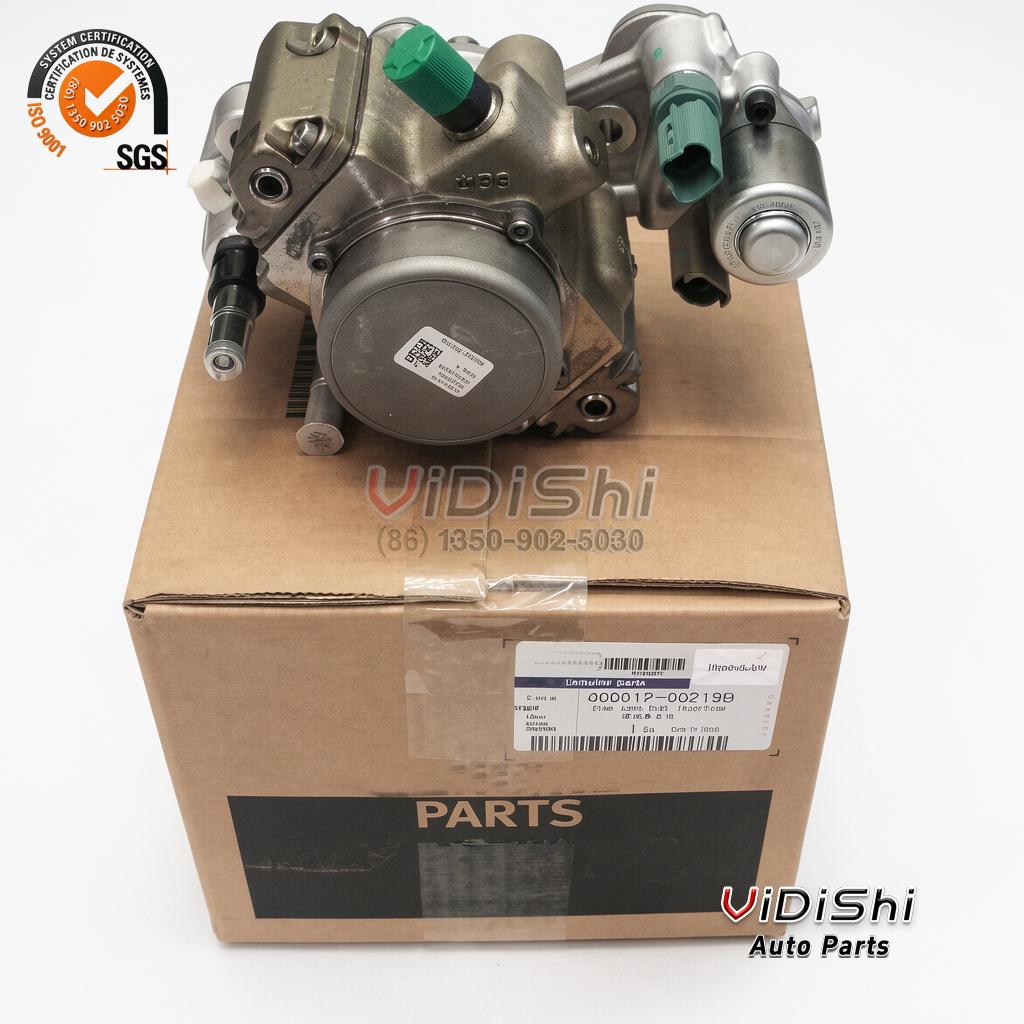
What is in the box. One common rail fuel pump, as supplied and as photographed: the pump housing, the high pressure section, the transfer pump with its metering valve, the drive spline, the electrical connector and the pipe ports, with the green protective caps fitted over the ports. That is the whole delivery. The fuel injectors, the common rail, the engine controller and the pump gasket and seal set are separate items with their own numbers, and none of them is sold with this pump. If your machine needs more than the pump, tell us before ordering and we will point you at the right line rather than have a unit arrive that cannot complete the job.
Cross reference and how to read it
The numbers that resolve to this pump, and what each one is. This is a map of one part, not a list of interchangeable parts.
| 490012-00219B | Our catalogue number for this pump, and the number our packing list carries |
| 49001200219B | The same catalogue number written without the hyphen |
| 400912-00219B | Doosan OE number, printed on the label attached to the unit (Confirmed) |
| 40091200219B | The same OE number written without the hyphen |
| 400912-00219A | Earlier published Doosan form for the same pump (Reference) |
| 28526888 | Published Delphi number for this pump (Reference) |
| 7249380 | Published Bobcat number for this pump (Reference) |
| 7516847 | Published Bobcat number that supersedes 7249380 and 7030405 (Reference) |
| 28394200 | Names the same pump (Reference) |
| 28490603 | Names the same pump (Reference) |
| EX836101 | Names the same pump, and is the number used on remanufactured listings (Reference) |
| 7030405 | Names the same pump, and 7516847 supersedes it (Reference) |
| 2453470001 | Names the same pump (Reference) |
| 28302492 | Names the same pump (Reference) |
| 7334040 | Names the same pump (Reference) |
Read the table from the top, because the order matters. 490012-00219B is our catalogue number and it is the number this page is filed under; the ungrouped form, 49001200219B, is the same number without the hyphen, and a parts system will match one form and not the other, which is worth knowing before a search box tells you a part does not exist.
The 400912-00219B row is the one to read twice, because it is the number on the metal. The same run of digits appears on our paperwork as 490012-00219B and on the label, the casting and every parts catalogue as 400912-00219B, and the difference is which way round the middle pair sits. As a 490012-00219B cross reference, the table is therefore doing something slightly unusual: it is not bridging two different parts, it is bridging two spellings of one part. Anyone searching on either form needs to reach the same row, and anyone matching a label against a purchase order needs to see that the two agree. The earlier published form 400912-00219A is the same pump at an earlier revision, carried here on the same footing.
The 28526888 and 7249380 rows are the other two names buyers arrive with, and both of them are this pump. The Delphi number is the number the fuel system manufacturer publishes for the unit, and the Bobcat number is the number the equipment manufacturer published for the same unit fitted to its machines. We hold both as a Reference: each one tells you that a buyer holding it and a buyer holding the Doosan OE number are asking for the same part, and neither tells you who built the part in your hand. Bobcat has since published 7516847 as the number that supersedes 7249380 and 7030405, and that supersession is published data rather than our judgement, which is why the current number sits in the same table rather than in a footnote.
What the table deliberately does not do is extend itself. It does not say that a neighbouring number fits, that the pump suits an engine outside the published D18 and D24 applications, that a rebuild listing and a new unit are the same thing, or that a component number for the metering valve or the gasket set is settled. Those are exactly the assumptions that turn a cheap order into an expensive week of machine downtime, and we would rather leave the cell empty than fill it with a guess. If you are holding a number that is not on this list, send it to us with the engine plate and the pump label, and we will tell you what it is and whether it is this pump.
Built as a complete high pressure pump, supplied as one unit
What a self-contained pump gives a workshop that ordering around the fault would not.
One casting, all three fuel jobs
The high pressure section, the transfer pump with its metering valve and the drive end are supplied as a single unit, so a fault in any of them is answered with one part instead of a teardown and three order lines.
Two numbers printed so a search works
The Doosan OE number is on the label and our catalogue number is on the paperwork, so a buyer searching either form reaches the same pump instead of an empty result page.
Markings you can photograph
The cast digits on the housing flank and the four printed lines on the label give you a record of exactly what was on the machine, which is worth more later than a note in a notebook.
Ports capped for transit
The pipe ports carry protective caps and the drive end is protected in the carton, because the two areas a transit knock damages first are the ports and the coupling.
New, not an exchange pump
A new compatible unit rather than a remanufactured or exchange pump, so there is no core return, no core charge and no wait for an old part to be accepted before a replacement ships.
One piece minimum
The minimum order is a single pump, so a machine down with a failed rail can be put back on the same week it was diagnosed rather than after a set is broken up.
Correct by label, casting and plate
The part is matched on the label, the cast digits and the engine code plate, which is what keeps a pump fault from being billed as a filter, injector or sensor fault for a fortnight, and which is worth confirming on the evidence of a measured value rather than on a symptom list.
Open fields instead of guesses
Pressure, voltage, spline and delivery figures are left open on this page because we cannot source them for this number, and a field left open is safer than one filled with a plausible wrong value.
The practical difference shows up the first time the machine will not restart. A common rail engine with no rail pressure will usually crank and fire or crank and not fire, and the diagnosis path runs through the filters, the water separator, the wiring and the injectors before it reaches the pump. When it does reach the pump, the unit that comes off is one casting with three internal functions, and the sensible answer is the whole casting. The alternative is a meter reading at the rail, a low-pressure supply check and then a decision about whether the metering valve inside the pump is the part that has let go, and that decision still ends with a complete unit on the bench.
Keeping one of these on the shelf is also a scheduling decision rather than a parts decision. The common rail pump on a machine of this class is the difference between a machine working this week and a machine working once the part lands, and the one-piece minimum means holding a spare costs you one unit rather than a set. For a fleet running several machines on the same two engine codes, the same unit covers both the compact machines and the larger ones, which is the other reason distributors buy this line the way they do.
Signs of a failing high pressure pump on a common rail diesel
What a workshop sees on the D18 and D24 machines. The fault is only confirmed afterwards, on a pressure reading.
- Cranking over without firingA pump that cannot build rail pressure gives the controller nothing to work with, so the engine cranks and either fires on the last stroke or does not fire at all. On a machine that was running yesterday, that change is the strongest single signal on this list.
- A pressure-related fault code storedThe controller watches rail pressure against engine speed and load, so a pump that cannot deliver sets a stored code rather than only changing how the engine feels. Reading the stored codes before anything is replaced saves a parts chain.
- Smoke that will not clear when warmFuel that is not atomised properly leaves the stack. On a common rail engine that is a rail pressure or injector delivery problem, and the pump is one of the three things on the list to measure rather than guess.
- An idle that hunts or will not holdAt idle each cylinder is metered by its injector against a stable rail. A rail that sags under low demand shows up as an idle that will not settle, because the controller is trimming against a pressure it cannot hold.
- Loss of power when the engine is workedWhen the operator asks for fuel, a pump that cannot keep up delivers less than the calibration expects, and the machine feels flat exactly when it is asked for more. This is the symptom most often blamed on the machine rather than the pump.
- Hesitation that gets worse as the fuel warmsA metering valve or a filter that is marginal when cold often holds until the fuel heats and thins, and then will not pass what it passed at start-up. A fault that appears at temperature points at the fuel side and at the pump together.
- A diesel smell at the filler and a rising oil levelFuel that gets past the seals and into the crankcase produces both, and on a common rail machine the same leakage is what starves the rail. Worth acting on early rather than treating as a servicing item.
- Metal particles in the filter or the water separatorShiny flakes mean a surface is galling. That is the point at which a pump fault becomes an engine discussion, and the reason to replace on the evidence of a measured value rather than on a list of possibles.
- A pressure reading that will not holdThe measurement that settles it. A rail pressure that collapses with the engine idling, or that will not come up at all, points at the pump or the supply side, and a low reading across the whole range points at the supply rather than the high pressure section.
- A fault that returns after filters and injectorsFilters, water separators and injectors are the usual suspects on a diesel, so a pump fault is often diagnosed late. If the pressure reading is still wrong after those have been changed, measure again before ordering a second set of anything.
Read the list as symptoms rather than a diagnosis, because every item on it has at least one other possible cause. A blocked filter, a water separator full of water or a supply-side fault produces the same loss of rail pressure. Weak injectors produce smoke and hesitation with the pump entirely innocent. A wiring fault at the connector produces a pressure fault code with the pump perfectly healthy, which is why the connector is one of the four things to photograph before ordering. What separates them is measurement: read the stored codes, check the supply side, and take a rail pressure reading against what the engine is asking for. A rail that will not come up at all points at the pump or at the supply; a rail that comes up low, where the pressure that sags under load is the tell, points at the metering side; a rail that is correct with the injectors all changed points somewhere else entirely.
Two more practical notes. If the machine has recently had fuel system work, look there first: a supply union left slightly proud, an air lock in the low pressure line, or a metering valve connector refitted a pin out will produce exactly the symptoms above, and none of them need a pump. And treat one failed pump as a question about the rest of the fuel circuit. The injectors have been metering against the same rail and the same fuel for as long as the pump has been in the machine, the water separator is the same age, and the filter is whatever the last service put in it. A common rail fuel pump found on a pressure reading, with the supply and the injectors checked in the same hour, is a much cheaper afternoon than a pump found after three other parts have been bought on suspicion.
How the pump is replaced, and what has to be right
The mechanical sequence, and the four places where a correct part still ends up as a failed job.
- Photograph the label and the casting before anything is unbolted. The Doosan OE number on the sticker and the raised digits on the housing flank are the record of what was on the machine. Once the pump is in a bin the label is much harder to read, and the casting may be obscured by grime. Ten seconds of photography here is what makes the next pump a certainty rather than a guess.
- Read the stored fault codes and write them down. On a common rail machine the controller has already recorded what it saw. Clear codes only after reading them, and keep the numbers, because they are the difference between ordering the pump and ordering the wiring.
- Drain and depressurise the system properly. A common rail holds pressure with the engine off, and a line still under pressure comes off hard enough to injure. Follow the depressurisation procedure for the engine rather than assuming the engine being stopped means the rail is empty, and vent the low pressure side as well.
- Mark the pipe runs and the connector before removal. Photograph each pipe as it comes off and mark the electrical connector and the drive end orientation. On a pump that sits close to the engine bay, the routing is the part that is awkward to reassemble and the part that is easy to get wrong.
- Cap the rail and the ports the moment they are open. The rail ports and the supply ports on this pump are the parts a transit knock and a fingertip most easily damage, and the green caps in the photographs are there for a reason. A cap left off a rail port between the removal and the fitting is the most common way a good pump gets scrapped before it is ever run.
- Fit the replacement and torque the mounting fasteners evenly. The pump mounts against a machined face, and the mounting fasteners are the ones that determine whether the drive is aligned and the low pressure side seals. Work around them in sequence rather than tightening one hard, because an uneven face is a leak path and a misalignment is a drive wear.
- Reconnect the lines, the connector and the new gasket set. The pump gasket and seal set is a separate line and is not in the box, so have it in hand before the old pump is off. Renew it every time: a reused gasket on a high pressure pump is a leak that will be blamed on the new unit.
- Prime the low pressure side, then bleed the high pressure side. A common rail system will not lift on a dry system. Prime and bleed in the sequence the engine procedure specifies, run the supply until the rail pressure is stable, and only then turn the key. Cranking a dry high pressure pump is the expensive mistake on this job.
- Run it, check every union, and read the pressure under load. Start the engine and look for fuel at every union and around the drive seal while it is running, not after. Then take a rail pressure reading at idle and under working load and compare it with what the engine is asking for, and clear the codes that the successful run has now made historical.
The sequence itself is ordinary fuel system work. What is not ordinary is how much depends on the last hour of it. This pump has one casting that carries both halves of the fuel supply, so a mistake at the low pressure inlet does not simply starve the engine — it puts the whole unit at risk, and a mistake at the high pressure outlet puts the rail and the injectors at risk. The sealing faces between the two pressure levels are fine machined surfaces, and they are cleaned once, dried once and assembled once. A fingerprint across a sealing face is a leak, and a leak on this pump is read as a failed replacement rather than as a fitting error.
The second thing worth saying plainly is that a common rail pump is not a tune part. Rail pressure is set by the metering valve inside the pump and read by the controller, and the engine is calibrated against a pressure curve that a replacement unit has to match. We do not publish a pressure figure for this number because we cannot source one, and that is exactly the reason the pressure has to be confirmed after fitting rather than assumed from what the old pump was doing. If the machine has a history of rail pressure trouble, tell us when you order, because that changes whether the injectors and the supply side should be looked at in the same visit.
The third is the gasket and seal set. It is a separate line with its own number, it is not in the box with the pump, and reusing the old one is the most common reason a new pump is returned. Get it in hand before the old pump is off the machine, and treat the pump as a two-part job rather than a one-part job. The fourth is the identification record. A pump that comes off a machine with a photographed label and a photographed casting is a job that closes cleanly; a pump that comes off with the label already unreadable is a job that turns into an argument about which part was fitted, and that argument usually surfaces at the next failure rather than at the bench.
Warranty and after-sales cover
What we stand behind on a high pressure pump, and what is outside the cover.
Every 490012-00219B unit is covered by a 12-month warranty against manufacturing defects. That covers a pump that arrives out of specification or fails early because of how it was made. It does not cover damage from contaminated fuel, from water in the system, from incorrect fitting, from a supply union left proud, from a rail port left uncapped, or from a fault elsewhere in the fuel circuit. It is a supplier warranty from Vidishi Auto and it is not a Delphi warranty and not a Bobcat warranty — we are not a dealer for either, and no cover from either travels with this part.
If a unit is suspected faulty, send us the order reference, the number read off the label of the pump you removed, the stored fault codes and the pressure readings taken before and after fitting. We will confirm the next step against our warranty terms and the returns process.
The cover sits at unit level. It applies to the pump as supplied, and it does not extend to the engine, to the machine, to labour, to the rail, to the injectors, or to another component damaged when a faulty pump was run on. That boundary is normal for a fuel system part, and it is worth stating before the order rather than after a problem.
Two questions buyers ask. The common rail pump warranty runs from delivery rather than from fitting, so a unit held on the shelf as a rapid-response spare is still covered for the stated term from the date it reached you. And because there is no core return with our supply, the warranty is not tied to an exchange claim: the old pump stays yours, and what you do with it has no effect on the cover on the new one. We would rather have the removed pump and its label photograph for the failure file than have a core charge sitting on the account.
Wholesale supply for workshops and distributors
A high pressure pump line is bought one machine at a time, so this line starts at a single unit and scales from there.
The minimum order quantity is one piece, and the reason is commercial rather than mechanical: this is a failure item, not a service item. Nobody replaces a common rail pump on a schedule, so a buyer needs one unit in hand the day the machine stops rather than a pallet the week after. From there the line scales normally — a fleet running several machines on the D18 and D24 takes one unit per machine plus the spare it wishes it had, and a distributor takes these alongside the rest of a fuel system order on one set of export documents.
We act as a diesel fuel pump supplier for export and we build this line ourselves as the manufacturer behind the Vidishi Auto brand. Pump pricing is quoted per order rather than published as a fixed figure, because pricing moves with quantity and with what else is on the same shipment, which is how fuel injection pump wholesale normally works. Mixed orders are routine on our side: put these pumps alongside filters, lines, sensors or other engine lines and they travel on the same paperwork.
For trade buyers, two practical points about a pump line. First, because there is no core return and no core charge, procurement does not carry a returns loop or a deposit on top of the order itself — the administrative cost that usually eats into a fuel parts order simply disappears, and the stock room does not have to book a return against a machine that is still on site. Second, identification accuracy matters more here than on almost any other line we sell, because a pump ordered against the wrong number of the two spellings is a return that costs a freight move in each direction. Our stock photographs show the label and the casting on every unit, and heavy equipment parts distributors can ask for batch photographs of the labels before ordering so their counter staff are matching against the same evidence we are.
Label and casting photographs are part of the offer rather than a favour. What leaves our floor is one production run with the same label layout and the same casting on every unit, and the pictures on this page show a pump as it is counted before packing — the same sticker position, the same printed lines, the same cast digits in the batch. A distributor who sells against a photograph can only do that honestly if the stock really does look like the photograph, and on a line where the number exists in two spellings that consistency is what stops an order going wrong on the dock rather than in the bay.
Distributors serving plant fleets and construction yards will also find this line sits cleanly beside the wider fuel system range on this site, and the commercial mechanics of an ongoing account — price reviews, mixed containers, document handling — are described on the partner page. A parts distributor holding this number against an enquiry can quote from this page without waiting for us, and every pump that ships carries the same label and casting shown in the photographs above.
Packaging, shipping and lead time
How a pump is packed for export, and what to expect on the order.
| Single package size | 46 × 36 × 32 cm (packing estimate) |
| Single gross weight | 9.0 kg (estimated figure) |
| Published carton figures | Withheld — the published single package dimensions and gross weights for this number disagree between sources, so no one of them is printed here as a specification |
| Net part weight as an OEM figure | Not published — the weight figures in circulation are retailer and rebuilt-unit figures |
| Minimum order | 1 pc |
| Protection | Pipe ports capped, drive end and casting protected, boxed individually |
| Freight modes | Courier, air and sea |
| Documentation | Commercial invoice, packing list, HS code |
| Core return | Not required |
The package figures above are a packing estimate for a single boxed pump, and we label them that way deliberately. The published carton dimensions and gross weights for this number do not agree with each other between sources, and printing one of two conflicting figures as though it were a specification would put a number in your freight calculation that we cannot stand behind. What we give you instead is a figure we can pack and weigh against, which is the number that matters when a unit is on a pallet and a container is being planned. The maintenance guide covers the surrounding service habits that decide how long a fuel system stays healthy.
Lead time is quoted per order and depends on quantity and on what else is on the same shipment. For export shipping of fuel system parts, every order leaves with its paperwork in place — commercial invoice, packing list and HS code. Read our shipping information for freight options, and track your order once it ships.
A trade order is packed the way the photograph shows it. The pipe ports carry their caps and the drive end and the casting are protected before the carton closes, because those are the areas a transit knock damages first and a damaged drive end or a marked casting is what turns a cheap part into a second removal job. If your receiving process needs a different pack — labelled per engine, split per machine or boxed for retail — say so at quote stage and we pack to it. On a line where the same pump is searched under two different spellings of its number, a per-machine label on the carton saves an argument at the dock that a picking list never will.
Quality checks before a pump leaves us
How the 490012-00219B is treated before it is packed for export.
A high pressure pump carries the whole pressure margin of the fuel system in one casting, so this line is checked at unit level rather than by sample. Every unit passes an incoming check that the label carries the Doosan OE number and that the label is legible, a read of the cast digits on the housing flank against the batch paperwork, a check that the drive spline and the coupling teeth are free of damage, a check that the pipe ports and the electrical connector are clean and undamaged, a confirmation that the protective caps are fitted over the ports, and a packed-weight confirmation against the documented figure. The supplier shows a round system certification mark on the product photography, which is recorded here as a supplier statement rather than as a certificate we issue. Rather than publish reviews we cannot verify, we tell you how the part is inspected and let your own pressure reading be the judge.
490012-00219B FAQ
The questions buyers ask most about this pump and the numbers it answers to.
Why does this pump appear under two different numbers?
Because two spellings of the same number are in circulation, and they are the same run of digits in a different order. Our catalogue and packing list carry 490012-00219B, which is the number the source listing was filed under. The unit itself carries the Doosan OE number 400912-00219B on its label, and that is the form every parts catalogue we can check prints. A parts search on one form will not find the other, so both are printed on this page, in the specification table and in the cross reference table, and our written match confirmation quotes the form on your label rather than the form on our paperwork. If your unit reads either number, it is this pump.
Do the numbers 28526888 and 7249380 belong to this same pump?
They do, and this was checked rather than assumed. Independent fuel system catalogues and equipment parts catalogues both carry 28526888 as the Delphi number and 7249380 as the Bobcat number for one and the same high pressure common rail pump, and both of them list the Doosan OE numbers against it. Bobcat has since published 7516847 as the number that supersedes 7249380 and 7030405, and 28394200, 28490603 and EX836101 appear against the same unit. We publish those as references for fitment and identification. They do not tell you who built the pump in your hand, and the pump we supply is a new compatible replacement sold under the Vidishi Auto brand, not a Delphi-branded or Bobcat-branded product.
What exactly arrives when I order this number?
One complete high pressure common rail fuel injection pump, supplied and photographed as a single unit: the pump housing, the high pressure pumping section, the transfer pump with its metering valve, the drive spline, the electrical connector and the pipe ports, with protective caps over the ports. It is not an injector, not a nozzle, not a pumping element and not a governor. The fuel injectors, the common rail, the engine controller and the pump gasket and seal set are separate items with their own numbers and none of them is in the box. If the machine needs more than the pump, tell us before ordering and we will point you at the right line.
How do I confirm the right pump before ordering?
Four checks, all quick, and all done on the part rather than on a model list. Photograph the label stuck to the unit and read the Doosan OE number on it. Read the raised digits cast into the housing flank. Send us a photograph of the engine code plate, because the D18 and the D24 are different engines and the plate is what tells them apart. Then send a photograph of the pipe ports and the electrical connector on the pump coming off. We reply with a written match confirmation before anything is invoiced, and that step is what stops a wrong pump crossing a border to reach you.
Which engines does this pump fit?
The published application is the Doosan D18 of 1.8 litres and the Doosan D24 of 2.4 litres, both four stroke diesel. Published engine data gives the D18 as a three cylinder and the D24 as an in-line four cylinder, with the same 90 by 94 mm bore and stroke quoted for the pair, which is part of why one pump number appears against both. The machine coverage in the parts catalogues sits with the Bobcat compact excavators, skid steer loaders, track loaders and Toolcat machines built around those engines, and with a spread of Doosan forklift applications. Those are catalogue attributions rather than build records, so we confirm each one against the engine code plate.
What about the DX60-9C mini excavator?
The Doosan DX60-9C is a mini excavator published with a D24C engine of 2.4 litres and four cylinders, which places it inside the D24 half of the engine family by displacement and by cylinder count. The source listing for this pump names that machine, so we name it too. What we do not have is a parts catalogue that lists the DX60-9C against this pump number, so we hold it as a machine-level attribution and settle it the same way as everything else: send the engine code plate and we confirm it in writing. If the plate reads D24C, that is what we would expect on this pump.
Why is the maximum rail pressure not published on this page?
Because we cannot tie a pressure figure to this pump number in a way we would stand behind. The pressure figures available for this family are quoted for the rail system as a whole rather than against the pump, and a rail pressure figure is a calibration value rather than a property of the casting. Printing one would put a number on the page that a buyer could reasonably treat as a specification and then measure against. The measurement that matters is the one taken on the machine after fitting, and we would rather help you read that than hand you a figure that does not belong to the part.
What about the control voltage on the connector?
Also not published, and for a sharper reason than the pressure. An electrical figure that is wrong does not give a warning; it gives a pump that will not prime, or a metering valve that does not respond, or a solenoid that is damaged by the wrong supply. The figures in circulation for this family are not tied to this pump number by a source we can stand behind, so the field stays open and the connector is confirmed against the pump coming off instead. Send us a photograph of the connector and its pin count and we will tell you what the unit you are replacing had, which is the evidence that settles it.
Which symptoms point at a failing high pressure pump?
A common rail engine with no rail pressure usually cranks without firing, or fires only on the last stroke, and that change on a machine that was running yesterday is the strongest signal there is. Beyond that, watch for a stored pressure-related fault code, smoke that will not clear when the engine is warm, an idle that hunts, power that falls away under load, hesitation that appears as the fuel warms, and a diesel smell at the oil filler with a rising oil level. The measurement that settles it is a rail pressure reading taken at idle and under load. Read the list as symptoms, since every item on it has at least one other possible cause.
Does the pump need the rest of the fuel system worked on at the same time?
Sometimes, and it is worth knowing before you order. On a common rail machine the injectors, the water separator, the filters and the supply lines all work against the same rail and the same fuel, and they are all the age of the pump. A pump that has failed after water in the system, or after a filter that let debris through, will often be followed by an injector or a metering problem if the rest is left alone. Whether a fuller job is sensible depends on what the fault investigation found, how long the machine has been running and what the readings say. We supply the pump rather than a system kit, so tell us what the investigation found.
How many do I have to order, and what is the minimum?
One piece, and that number is commercial rather than mechanical. This is a failure item rather than a service item, so the buyer needs a unit in hand on the day the machine stops rather than a pallet the week after, and one unit is also one spare machine covered. There is no core return and no core charge with our supply, because we sell new compatible pumps rather than exchange parts, so nothing has to come back and there is no exchange loop to manage. Larger quantities and mixed orders travel on the same export paperwork, and the same unit covers both published engine codes.
What is the lead time and how does the pump ship?
Lead time is quoted per order rather than promised as a fixed number of days, because it depends on the quantity and on what else is travelling in the same shipment. Each pump is boxed with the pipe ports capped and the drive end and the casting protected, because those are the areas a transit knock damages first and a marked casting is what you cannot match a replacement against. Orders ship by courier, air or sea with a commercial invoice, a packing list and HS code documentation. Ask for a delivery time against your destination and we put it in writing with the quote.
What warranty comes with the pump?
A 12-month warranty against manufacturing defects at unit level. It covers a pump that arrives out of specification or fails early because of how it was made. It does not cover damage from contaminated fuel, from water in the system, from incorrect fitting, from a supply union left proud, from a rail port left uncapped, or from a fault elsewhere in the fuel circuit, and it does not extend to labour, to the machine or to the injectors. It is our own supplier warranty. If there is a claim, send the order reference, the number read off the removed pump and the pressure readings, and we confirm the next step against our returns terms.
Related pages
The pages around this pump on one site — the fuel system range, the reference material behind the numbers, and the pages that explain the circuit it works in.
Technical support and how to order
Send us the number off the label and your engine plate and we will confirm the pump.
Support is not an add-on here — it is how most of these orders get placed correctly, and on a part that comes in two spellings and two engine families the cost of getting it wrong is a freight move in each direction. It costs nothing before you buy: send a photograph of the label on the unit, a photograph of the cast digits on the housing, the machine model and a photograph of the engine code plate, and we check the whole set against what we supply before quoting. The engine plate is the item people skip, and on this pump it is the one that matters most, because the D18 and the D24 are different engines and the plate is what tells them apart. Support continues after delivery: priming questions, pressure reading questions and warranty claims all reach the same team, and the person who confirmed your fitment is the person who answers if something is not right.
Supplier note. WholesaleAutoPartsDirect is an independent supplier of compatible automotive parts and is not affiliated with, endorsed by or acting as an agent of Delphi, of Bobcat, of Doosan or of any vehicle or equipment manufacturer. Brand names and part numbers are used for reference and fitment only.
Reviews