
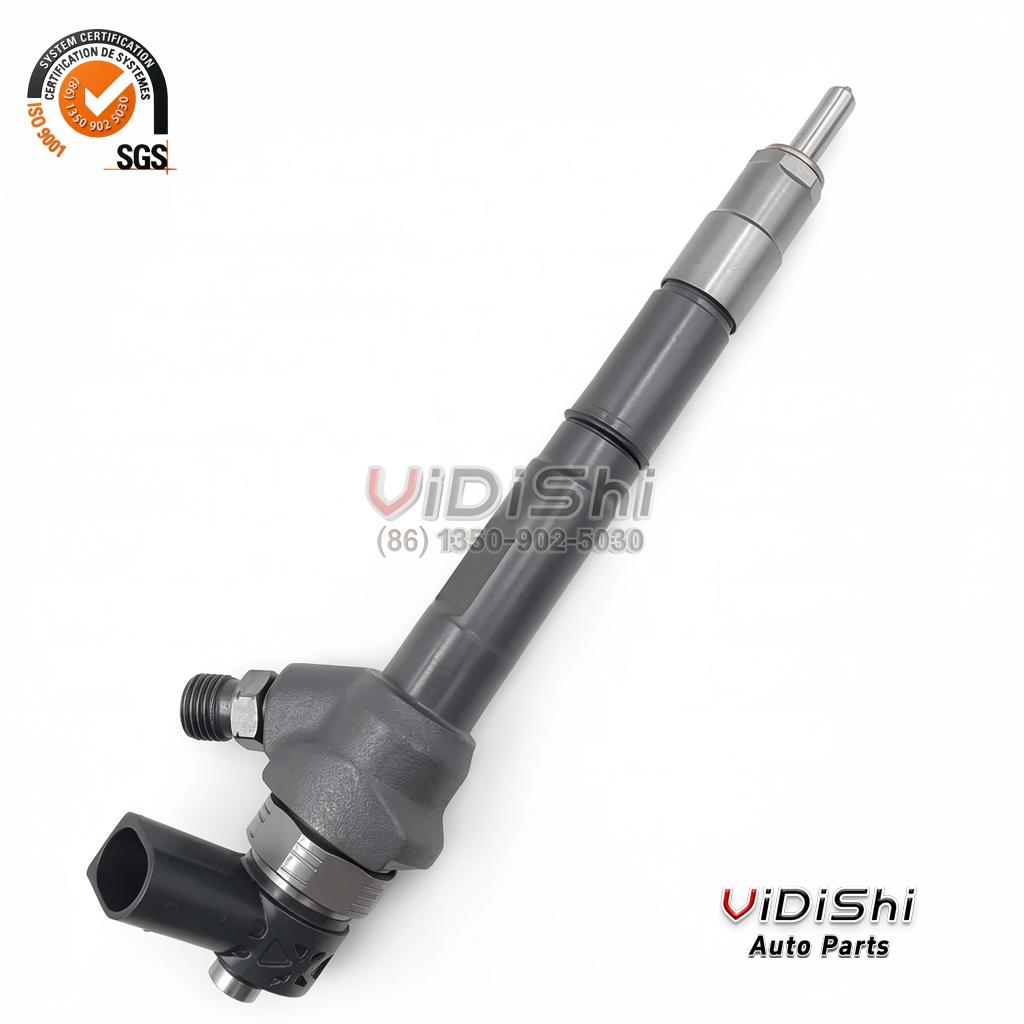
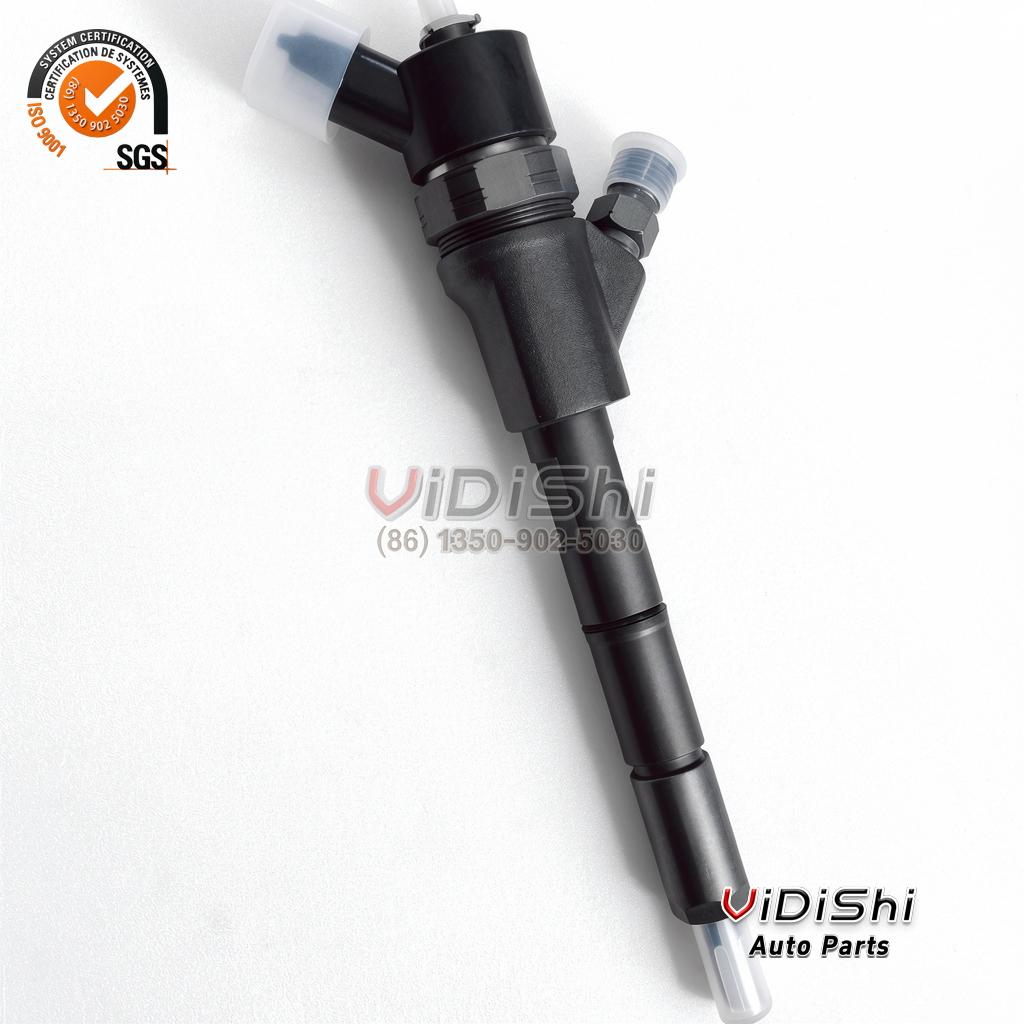
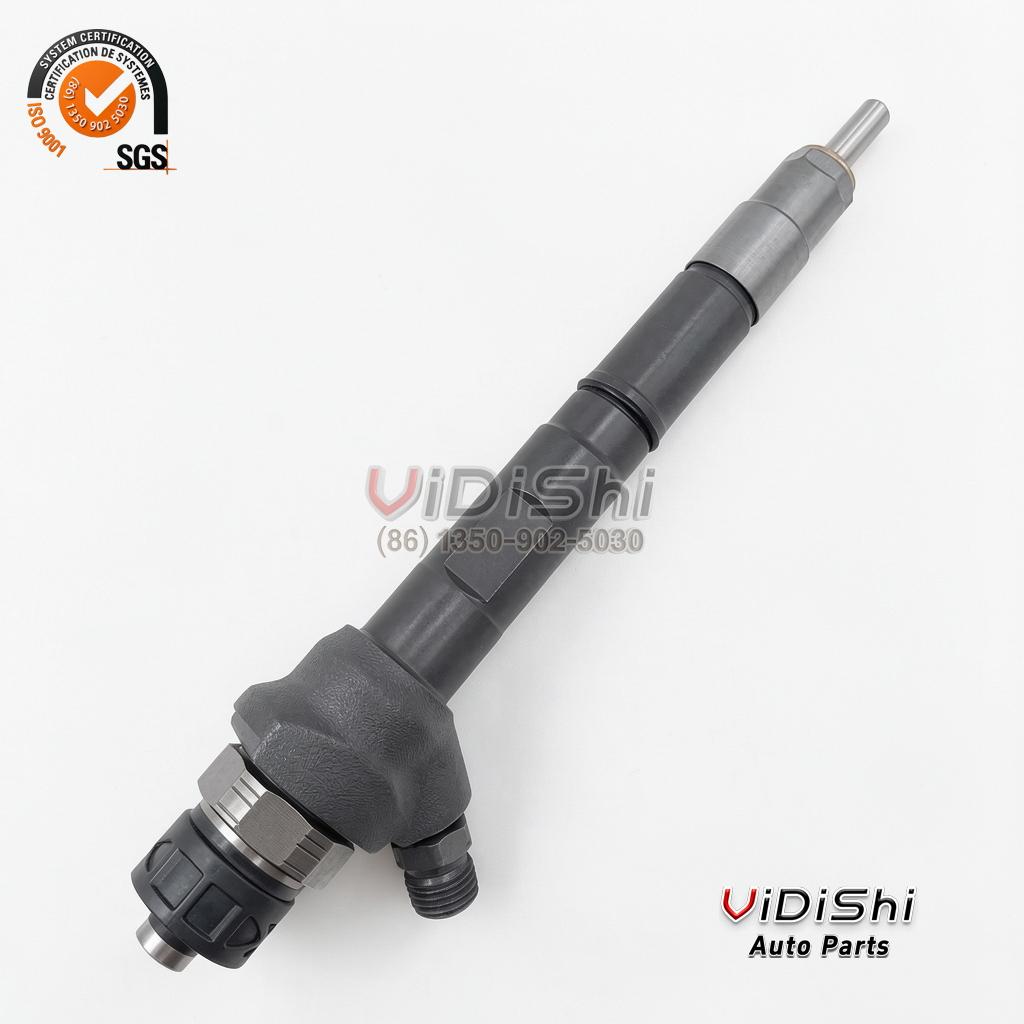
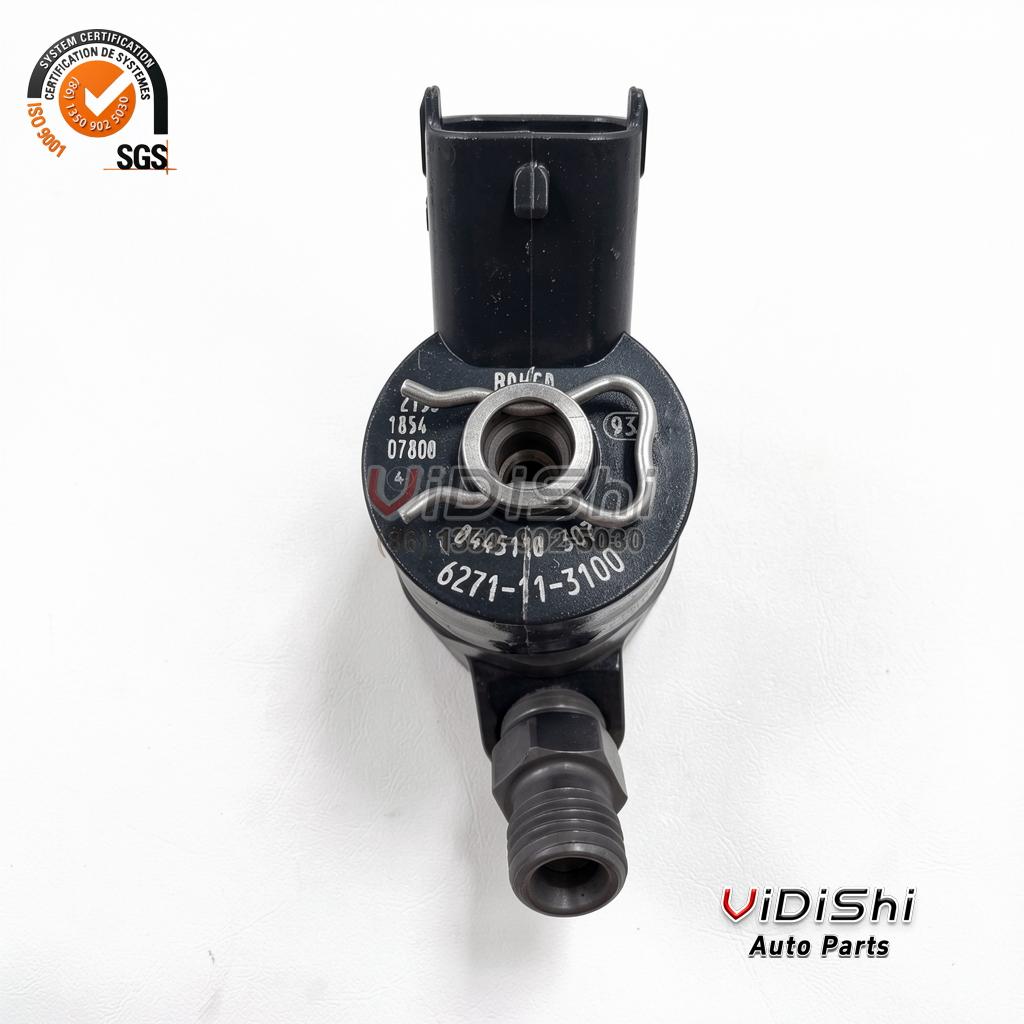
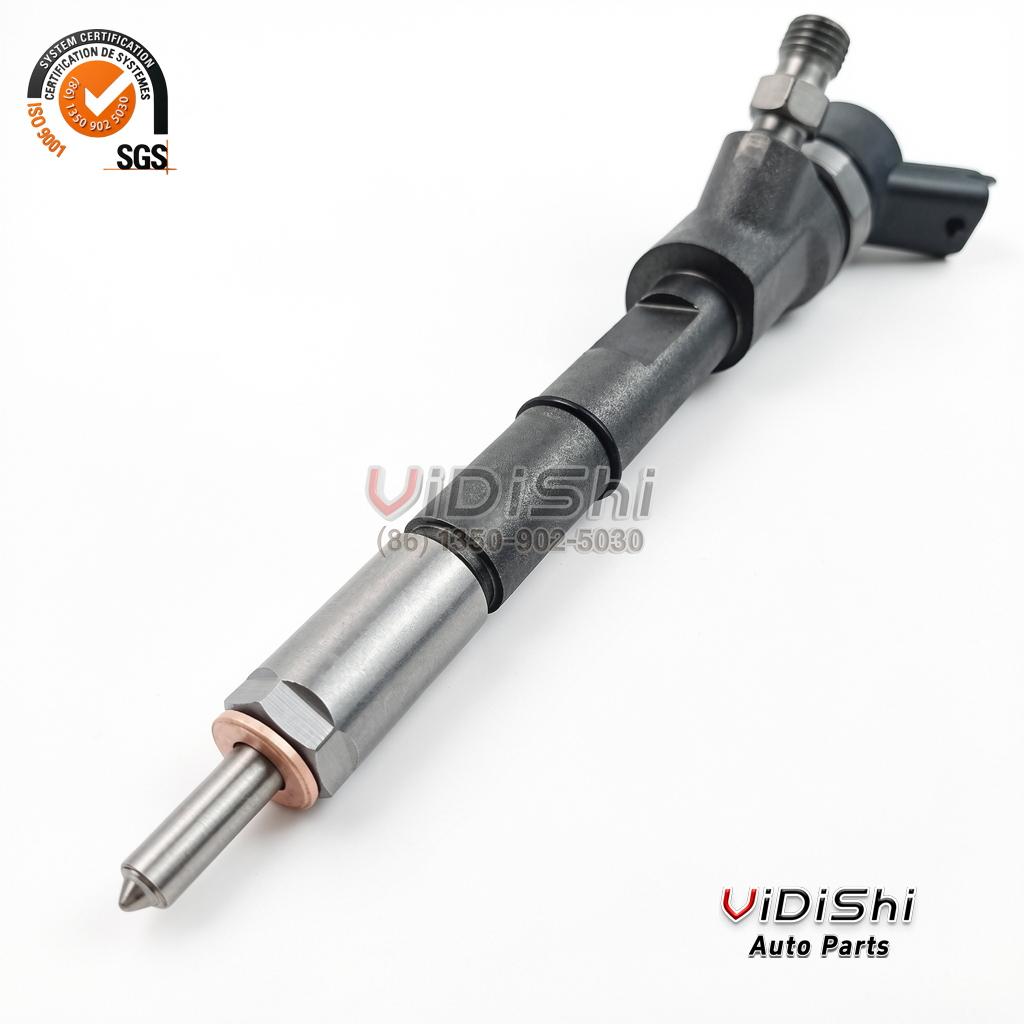
0445110307 Common Rail Injector for Komatsu SAA4D95LE5 6271113100
New 0445110307 common rail injector – a complete solenoid injector of the Bosch CRI2 generation for Komatsu SAA4D95LE-5 diesel engines of about 3.3 litres, fitted in excavators and loaders such as the PC78-8. Cross-referenced to Komatsu OE 6271-11-3100 and Zexel 107750-0610. A Vidishi Auto compatible replacement, not a Bosch-branded part, with a 12-month warranty. Single package 30x10x20 cm, 3.000 kg gross, MOQ 4 pcs.
Original price was: $180.00.$87.00Current price is: $87.00.
100% Secure Checkout
Free Shipping Over $1099
Customer Satisfaction
International Shipping
Product Specifications
| Weight | 3.000 kg |
|---|---|
| Dimensions | 30 × 10 × 20 cm |
| make | |
| model | |
| engine | Bosch CRI2 Common Rail, Cummins QSB3.3 / B3.3, High-Pressure Common Rail, Komatsu SAA4D95LE-5 3.3L Diesel |
| position |
Product Details
Supply highlights
The commercial numbers that decide the order, for an injector supplied from a four-piece minimum with no core return.
Fitment verification in four steps
Applications are published for this injector, so the check is quicker than on a part with no fitment data — but it is still a check.
| Step | What to look at | What it proves |
|---|---|---|
| 1. Read the number on the old injector | The hex etching on the unit you are removing | Confirms the part: 0445110307 on the injector side |
| 2. Photograph the engine code plate | The plate on the engine or in the machine records | Confirms a SAA4D95LE-5-family engine, not a neighbouring variant |
| 3. Check the bracketed trim code | The small code etched beside the part number | Confirms the code your controller expects to be written in |
| 4. Get written confirmation | Our reply before anything is invoiced | The match is agreed in writing, not assumed from a chart |
The applications we stand behind for this injector are the Komatsu SAA4D95LE-5 diesel of about 3.3 litres — the engine catalogued under the SAA4D95LE-5 label in reseller fitment data — and the Cummins QSB3.3 and Cummins B3.3 industrial engines that carry the same number, working in machines such as the PC78-8, the PC130-8, the PC138US-8 and the WA100M-6. On a Komatsu excavator running the SAA4D95LE-5 family, this is the komatsu fuel injector the engine was built with, and an excavator injector order that starts from the etched number rather than the model badge is the one that arrives correct. That is a tight, well-evidenced list, and an 0445110307 belongs to it and to nothing else we can back. The Cummins QSB3.3 and B3.3 industrial applications are published against this number by several sources, and the engine code plate with the old injector settles the match in writing before anything is invoiced. A komatsu injector order that starts from the number on the removed unit almost never goes wrong; an order that starts from a machine model list sometimes does.
Why the removed injector matters more than the model list. Engine families run several injector numbers across years, ratings and emissions revisions, and two machines with the same model badge can take different parts. The hex etching on the old unit is the ground truth: it carries the injector number and the bracketed code together, and it survives in the darkest corner of the engine bay long after the paperwork is gone. Match that, then match the plate, then order. A komatsu fuel injector bought this way arrives correct the first time, which is the whole point of the four steps above.
What this page is not claiming. We are not saying that any neighbouring number in the Bosch 0 445 110 series fits, that the catalogued truck applications are covered without a plate check, or that an injector from another engine family will substitute. 0445110307 is the injector for the SAA4D95LE-5-family applications published against it, and the Komatsu and Zexel numbers describe the same unit on those engines. Anything beyond those lines is better answered from your own parts data, and we would rather answer it with you than assert it here.
What a common rail injector does on a SAA4D95LE-5 engine
A plain-language look at the part, the numbers on it, and why it is so often confused with something else.
A diesel engine with a common rail system separates fuel pressurisation from fuel delivery. A high-pressure pump fills a rail that stays at pressure, and each common rail injector draws from that rail — the rail pressure itself is held by the pump and regulated by the control module, so it does not fall when one injector opens — and meters fuel into its own cylinder, in the quantity and at the moment the control module commands. As a common rail injector for Komatsu SAA4D95LE-5 engines, this unit answers to exactly that description and to nothing narrower. The SAA4D95LE-5 engines work exactly that way, and the injector is the part that turns pressurised fuel into combustion: an electrically fired solenoid valve inside the injector lifts, fuel flows through the nozzle as a metered spray, and the valve closes to end the pulse. Because metering happens inside each injector rather than at a shared pump, small differences between injectors become visible as rough running, which is why injectors carry trim codes and why a full set behaves better than a mixed one.
The naming is where most ordering mistakes start. The words fuel injector, diesel injector and common rail diesel injector describe a function shared by thousands of parts, not one unit. Within the CRI2 generation, the series behind this listing, the same hardware family serves many engines with different numbers, and neighbouring numbers do not substitute for one another. What makes a unit the diesel fuel injector for your machine is the combination of number, engine plate and code — which is why this page anchors on 0445110307 and treats everything else as reference rather than promise.
On a SAA4D95LE-5 the diesel fuel injection circuit is one shared path: one pump, one rail, and one injector per cylinder drawing from the same fuel. That is what a common rail injection system means in practice — pressure is held centrally and each injector meters what its own cylinder is told to take — and it explains the split you can diagnose with: a supply-side fault drags every cylinder down together, while a single failing injector shows up on one cylinder and leaves the rest steady.
When an injector stops behaving, the engine tells you through one cylinder before it tells you through the whole high pressure common rail circuit. A rough idle that no filter change cures. Smoke on cold starts that clears late. A fuel injection pulse that arrives late shows up as a knock under load. Each of these is examined properly in the symptoms section below, together with the leak-off test that finds the guilty cylinder without guesswork.
Where our supply differs is what arrives. Bosch and the engine maker supply this part through their own channels, and a buyer who needs a dealer box does need to go there. What we supply is a common rail injector replacement — a new compatible unit for the same job, sold under the Vidishi Auto brand, etched with the same number and code format, at a four-piece minimum with no core return. That last point matters on a diesel job: nothing has to come back, there is no exchange loop to manage, and the old injector stays with you for the parts shelf or the warranty file.
One thing we do not do is dress that up. The 0445110307 injector we ship is ours, not Bosch’s and not Komatsu’s. The Bosch number, the Komatsu equipment number and the Zexel number appear on this page so you can match the part you are replacing. They are references for fitment, not a claim about who made the part. The Bosch reference pages on this site hold the cross-reference material, and the glossary explains the terminology if any of the names above are unfamiliar.
0445110307 specifications
Confirmed values first, then the parameters we deliberately mark as not published rather than guess. The second table is long on purpose: on a common rail injector, most of the figures a buyer might want are held inside the manufacturer’s calibration data, and saying so is more useful than printing an approximation.
| Bosch part number | 0445110307 |
| Alternative number form | 0 445 110 307 |
| Komatsu OE number | 6271-11-3100 · 6271-11-3100 (Reference) |
| Zexel number | 107750-0610 · 1077500610 (Reference) |
| Part type | Common rail injector, solenoid actuated, complete assembly |
| Reference series | Bosch CRI2 (Reference — series description from published catalogues) |
| Injection system | High-pressure common rail, diesel |
| Applications | Komatsu SAA4D95LE-5 / SAA4D95LE-5, about 3.3 litres (Reference) |
| Typical machines | PC78-8, PC130-8, PC138US-8, WA100M-6, D31 (Reference — as published by aftermarket catalogues) |
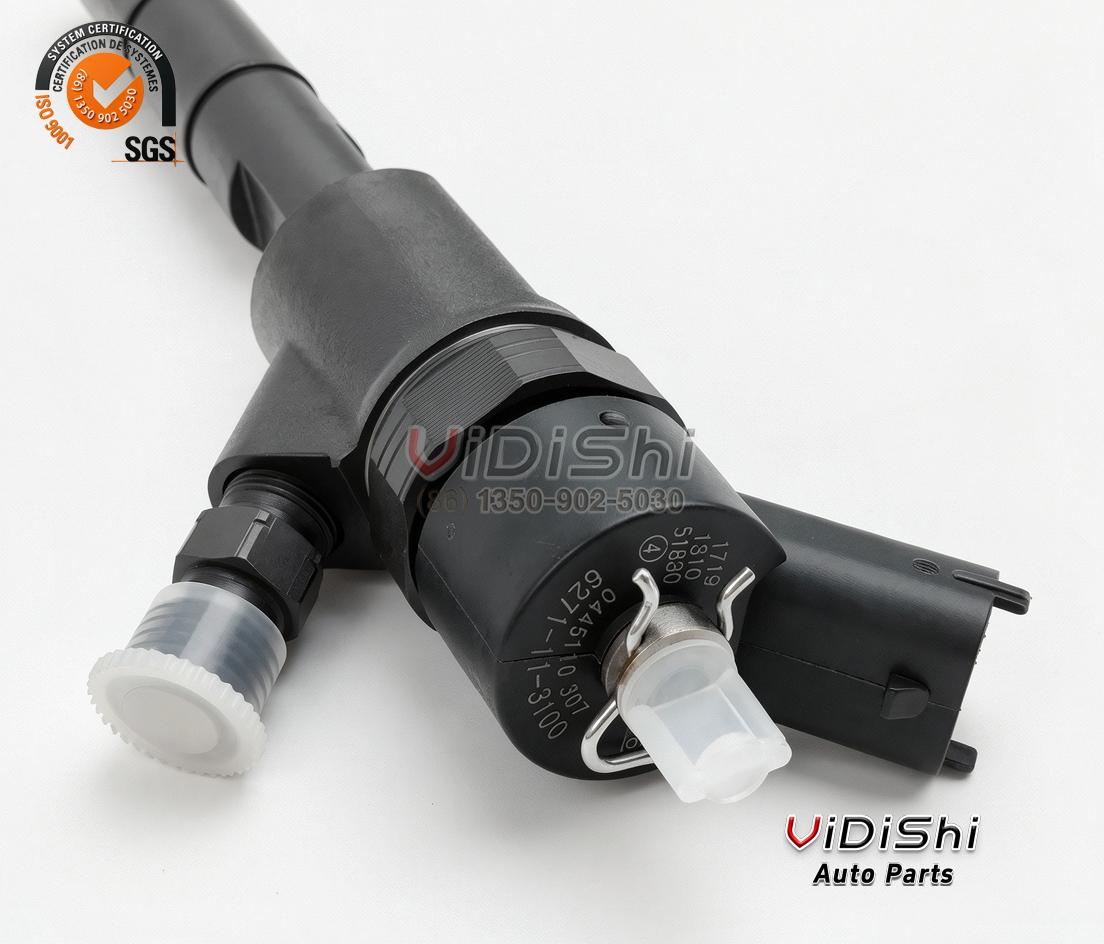
| Markings on supplied units | Cap face laser-etched 0 445 110 307 and 6271-11-3100 with a (93) code; cap-side repeats the same pair (Confirmed) |
| Condition | New — Vidishi Auto compatible replacement |
| Supplied brand | Vidishi Auto — a compatible replacement part, not Bosch-branded |
| Minimum order quantity | 4 pcs |
| Warranty | 12 months against manufacturing defects |
| Single package size | 30 × 10 × 20 cm |
| Single gross weight | 3.000 kg |
| Core return | Not required with our supply |
| Nozzle and control-valve component numbers for this unit | Not published — catalogue claims found are single-source and are not asserted here |
| Rated injection pressure per unit | Not published — no per-unit figure is released by a source we can stand behind |
| Nozzle spray-hole count and flow data | Not published — withheld rather than approximated |
| Solenoid coil resistance and response time | Not published — internal figures are not released |
| Bare injector net weight | Not published — only the packed gross weight is given |
| Meaning of the etched batch block G1730-1649, 24-10-16 | Observed marking only — not resolvable to a published catalogue number |
| Whether the bracketed code (376) applies to every unit | Not published — buyers confirm the code their controller expects |
| Interchange against other 0 445 110 numbers | Not published — only 0445110307 is asserted for this injector |
| Emissions-stage certification of the applications | Not published — confirm against the engine plate |
How we label data. Confirmed means a value read directly from the goods we handle, including the hex etching, the valve face and the transport packaging. Reference means a Bosch, Komatsu or Zexel number quoted so your paperwork can be matched, and carrying no claim about origin. Not published means the field is left blank on purpose — a flow figure or a component number that we cannot source would be worse than an empty cell, because it would end up in somebody’s parts order.
What is in the box. One complete injector assembly: the injector body with its solenoid valve and nozzle, the fitted seals as photographed, and its own transport tray and carton. Mounting hardware belongs to the engine rather than the injector, and no separate seal kit is asserted for this line. Nothing on this page is sold loose from the injector, and nozzle and valve components keep their own pages for buyers who need those parts individually.
Cross reference and how to read it
The numbers that resolve to this injector, and what each one is. This is a map of one unit, not a list of interchangeable parts.
| 0445110307 | Bosch injector number (this unit) |
| 0 445 110 307 | Bosch number, grouped form |
| 6271-11-3100 | Komatsu OE number, ungrouped form (Reference) |
| 6271-11-3100 | The same Komatsu equipment number, written with the printed grouping (Reference) |
| 107750-0610 | Zexel number (Reference) |
| 1077500610 | Zexel number, ungrouped form (Reference) |
Read the table from the top. 0445110307 is the Bosch number and it is the one that matters on the part itself: it is what the supplied units carry etched on the hex beside the code, and it is the number the reseller catalogues list first. The grouped form, 0 445 110 307, is the same number with the spacing the printed catalogues use, and a parts system will match one form and not the other, which is worth knowing before a search box tells you a part does not exist. As an 0445110307 cross reference, the table is a boundary as much as a bridge.
The Komatsu and Zexel columns are the second half of the mapping. Published cross-reference data gives 6271-11-3100, written 6271-11-3100 with the grouping, as the equipment number the engine side of the trade uses, and 107750-0610 as the Zexel number that older licensing agreements carried into the market — the entry a parts system prints as Zexel 107750-0610, sometimes without the hyphen as 1077500610. Those are cross-reference entries, not statements that the numbers were made in the same building. They exist so that a buyer holding a Komatsu number, a buyer holding a Zexel number and a buyer holding the injector itself can be told, in one line, that they are asking for the same unit.
What the table deliberately does not do is extend itself. It does not say that a neighbouring Bosch number fits, that a component number for the nozzle or the valve is settled, or that an injector from another engine family substitutes. Those are exactly the assumptions that turn a cheap order into an expensive week of machine downtime, and we would rather leave the cell empty than fill it with a guess. If you are holding a number that is not on this list, send it to us with the engine plate and we will tell you what it is and whether it is this injector.
Built as a solenoid injector, supplied as a service part
What this injector gives a workshop that ordering around the fault would not.
Complete assembly, ready to fit
The injector arrives as one unit: body, solenoid valve and nozzle together, exactly as the cylinder head takes them. No bench assembly, no guessing which sub-part your machine needs.
Etched number and code readable on arrival
The hex carries the injector number and the bracketed code in full, so the match against your old unit happens before the injector goes anywhere near the engine.
New, not an exchange unit
A new compatible injector rather than a reconditioned core, so there is no core return, no core charge and no wait for an old unit to be accepted before a replacement ships.
Four-piece minimum order
Supplied from four pieces, so a single machine repair is covered without buying stock for a fleet you do not run.
Export packing that protects the two ends that matter
Each injector travels in its own tray and carton with the nozzle tip and the valve end protected, because those are the surfaces a transit knock ruins first.
Solenoid injector of the CRI2 generation
The same electronically controlled, solenoid-actuated architecture the SAA4D95LE-5 engines were built around, so the replacement behaves like the part it replaces.
No core reconciliation for procurement
Because the part is new rather than reconditioned, your paperwork stops when the shipment arrives; nothing goes back and nothing is tracked.
Correct by number, plate and code
The part is matched on the hex etching, the engine code plate and the trim code the controller expects, which is what keeps an injector fault from being billed as a pump or a rail.
The practical difference shows up at the leak-off bench. When one cylinder’s injector is returning too much, the machine either runs on a compromised cylinder until something else breaks, or the workshop swaps in a known-good unit and the fault disappears. Keeping a matched spare — correct number, correct code — turns a two-week machine stop into a same-week swap. That is the case for holding these four pieces even before anything has failed, and it is why the minimum order is set where a single repair, not a warehouse, is the unit of purchase.
Signs of a faulty injector on a SAA4D95LE-5 engine
What a workshop sees on this engine. The fault is only confirmed afterwards, on the leak-off bench and on live data.
- Hard startingAn injector that sprays late or weak leaves its cylinder unlit for the first seconds, so the engine cranks longer than it should before it catches.
- Black or grey smoke under loadUnburned fuel leaving the stack as smoke is the classic sign of a spray that has gone coarse, or of a cylinder getting more fuel than it can burn.
- Rough idle, or an idle that huntsAt idle each cylinder counts. One injector metering differently from its neighbours shows up as an idle that will not settle, often with a shake no engine mounting fault explains.
- Loss of power under loadWhen the operator demands fuel, a weak injector cannot deliver its share, and the machine feels flat exactly when it is asked for more.
- High fuel consumptionFuel that leaks past a worn valve inside the injector either returns to the tank or burns badly; either way the fuel gauge moves faster than the work done.
- A misfire that no ignition work curesOn a diesel there are no plugs to swap, and a persistent single-cylinder misfire with clean electrics points at the injector feeding that cylinder.
- Injector leak-off that stands out on the testThe test that settles it. Comparing back-leak volumes cylinder by cylinder shows the injector whose internal sealing has gone, before any part is ordered.
Read the list as symptoms rather than a diagnosis, because every item on it has at least one other possible cause. A tired lift pump or a blocked filter produces the same hard starting. A boost leak produces smoke and flat response without any injector being at fault. Black smoke on a cold start that clears as the engine warms is usually harmless; smoke that stays once the engine is hot and the machine is working is not. What separates them is measurement: back-leak volumes compared cylinder by cylinder with a leak off test, then live data while the engine loads. An injector on its way out shows a injector leak off volume that stands apart from its neighbours; a supply-side fault drags every cylinder down together. A stored rail pressure too low code belongs to the same conversation, and it is worth reading before a part is ordered, because the two causes cost very different amounts.
Two more practical notes. If the machine has recently had fuel system work, look there first: an injector seated dry, an old copper washer reused or a connector not fully latched will produce exactly the symptoms above, and none of them need a new part. And treat one bad injector as a question about the others: they are the same age and they have drunk the same fuel, so a fleet that replaces one usually budgets for the rest. A faulty injector found early is a cheap part; the same injector found late, when its wash has diluted the oil, is an engine discussion.
Fitting a common rail injector on the SAA4D95LE-5
A short, practical sequence for workshops replacing this injector in the field or in the bay.
- 1. Release the pressure firstLet the engine stand and release residual pressure before anything is opened. A common rail circuit holds pressure after the engine stops, and opening a fitting on a live system sprays fuel at injection-grade force.
- 2. Clean the well before it is openedWash around the injector, blow the well down, and only then release the clamp. Grit that falls into the open bore ends up on the nozzle seat, and the new injector wears it from its first minute.
- 3. Lift the old injector squareFree the injector with the correct puller if it resists. Leverage against the wiring or the fuel line ruins parts you are not replacing.
- 4. Inspect the bore and the seatCheck the copper seat in the head for carbon and scoring. A seat that will not seal is a blow-by path that no new injector will cure.
- 5. Fit a fresh copper washer and O-ringsA new sealing washer goes under every refitted injector, and every injector o ring on the body is renewed rather than reused. Reused seals are the most common cause of a weep after an otherwise correct diesel injector replacement.
- 6. Refit square and torque to the engine figureDrop the injector in square, seat the clamp, and torque to the figure for your engine. The figure belongs to the machine, not to the part.
- 7. Write the trim code before first startProgram the injector trim code — the bracketed code etched on the new injector — into the controller where the engine expects it, so fuel delivery is balanced cylinder to cylinder from the first start.
- 8. Verify with leak-off and live dataPrime, start, and check idle and load behaviour. Where a doubt remains, the leak-off test confirms the new injector behaves like its neighbours before the machine goes back to work.
Most of the risk in this job sits either side of the part itself. Before it goes in, cleanliness and the fresh seals decide whether it holds. After it goes in, the coding and a leak-off check decide whether it runs right. Neither is difficult and both get skipped under time pressure. The wider routine around injector work is in the installation guide, and the service habits that keep a common rail circuit healthy are in the maintenance guide. If you would rather talk the job through before you start, put the question to us first.
Two notes for workshops. Injector injector coding is not optional bookkeeping: the trim code lets the controller compensate the small manufacturing differences between injectors, and skipping it is a common cause of a rough idle after a correct swap. And record which injector went to which cylinder when a job is done in stages, because a fault that returns six months later is diagnosed twice as fast when the batch history is in the file. The injector code etched beside the part number is the key to both habits — photograph it at the bench and write it into the job card.
Warranty and after-sales cover
What we stand behind on an injector, and what is outside the cover.
Every 0445110307 injector is covered by a 12-month warranty against manufacturing defects. That covers a unit that arrives out of specification or fails early because of how it was made. It does not cover damage from contaminated fuel, from water in the system, from incorrect fitting, from reusing old sealing washers, or from a separate fault elsewhere in the fuel circuit. It is a supplier warranty from Vidishi Auto and it is neither a Bosch warranty nor a Komatsu warranty — we are not a dealer for either and no cover from either travels with this part.
If an injector is suspected faulty, send us the order reference, the number read off the unit you removed, and your leak-off readings. We will confirm the next step against our warranty terms and the returns process.
The cover sits at unit level. It applies to the injector as supplied, and it does not extend to the engine, to the machine, to labour, or to another component damaged when a faulty unit was run on. That boundary is normal for a fuel system part, and it is worth stating before the order rather than after a problem.
Two questions buyers ask. The 0445110307 warranty starts from delivery rather than from fitting, so an injector held on the shelf as a diagnostic spare is still covered for the stated term from the date it reached you. And because there is no core return with our supply, the warranty is not tied to an exchange claim: the old injector stays yours, and what you do with it has no effect on the cover on the new one.
Wholesale supply for workshops and distributors
An injector line is bought by the machine set, so this line starts at four pieces and scales from there.
The minimum order quantity is 4 pcs, which is deliberate. Four pieces cover a single machine repair with a spare for the shelf, and they let a workshop keep a known-good injector for the leak-off bench before it commits to anything bigger. From there the line scales normally — a plant fleet running several SAA4D95LE-5 machines will take a set per engine, and a distributor will take them alongside the rest of a fuel system order on one set of export documents.
We act as a diesel injection specialist supplier for export and we build this line ourselves as the manufacturer behind the Vidishi Auto brand. Injector pricing is quoted per order rather than published as a fixed figure, because pricing moves with quantity and with what else is on the same shipment, which is how fuel injector wholesale normally works. Mixed orders are routine on our side: put these injectors alongside filters, seals or other engine lines and they travel on the same paperwork.
For trade buyers, two practical points about an injector line. First, because there is no core return and no core charge, procurement does not carry a returns loop on top of the order itself — the part of buying fuel system parts that usually costs the most administration simply disappears. Second, batch consistency matters to resale: our batches ship from one production run with uniform etchings, so your stock photographs and your counter claims stay honest. If you need the number matched against a machine list before you commit, send the list with the engine plates and we will work through it with you rather than asking you to take the fitment on trust. Buyers comparing an aftermarket fuel injector line against a dealer box are welcome to ask for the batch photographs before ordering, and construction machinery parts distributors can ask for mixed-batch consolidation across several engine lines on the same shipment.
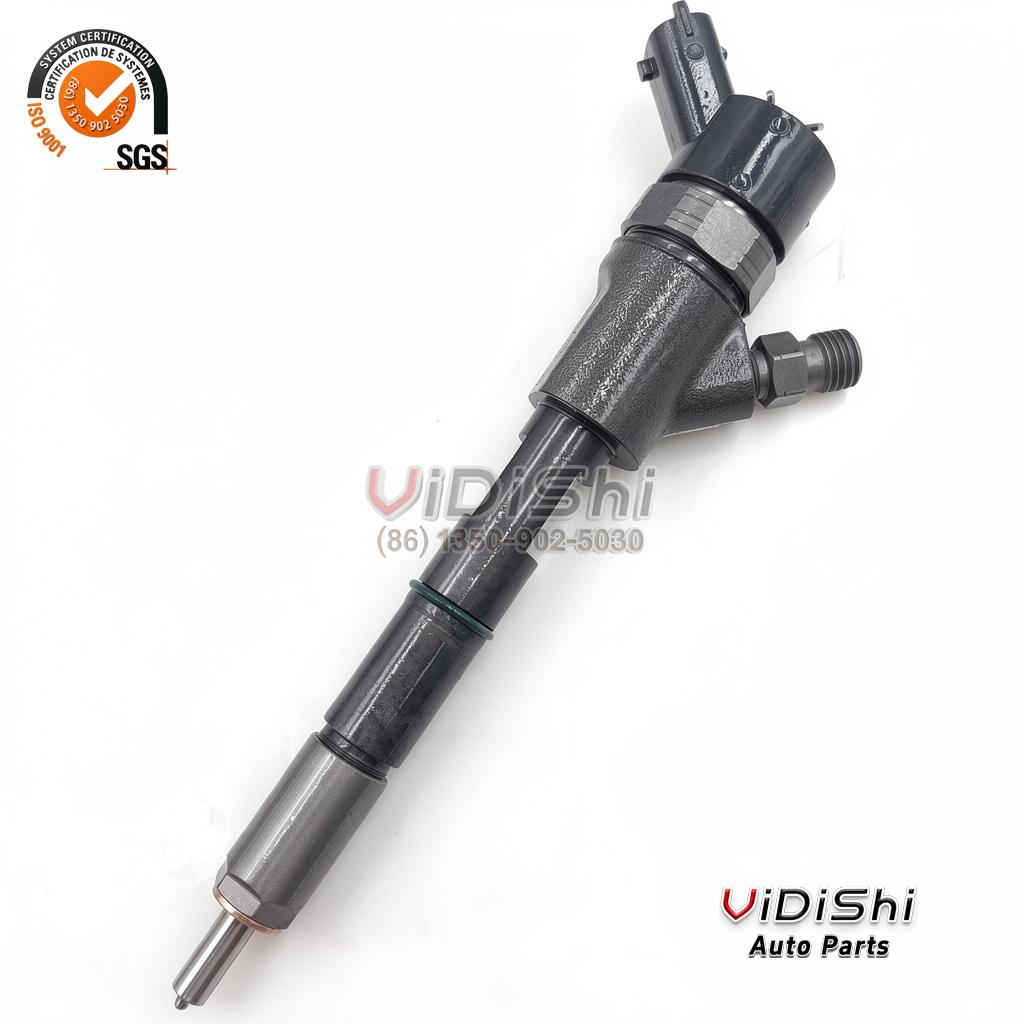
Batch photographs are part of the offer rather than a favour. What leaves our floor is one production run with uniform etchings, and the picture below shows a batch lined up exactly as it is counted before packing — the same number, the same code format, the same finish on every unit in the row. A distributor who sells against a photograph can only do that honestly if the stock really does look like the photograph.
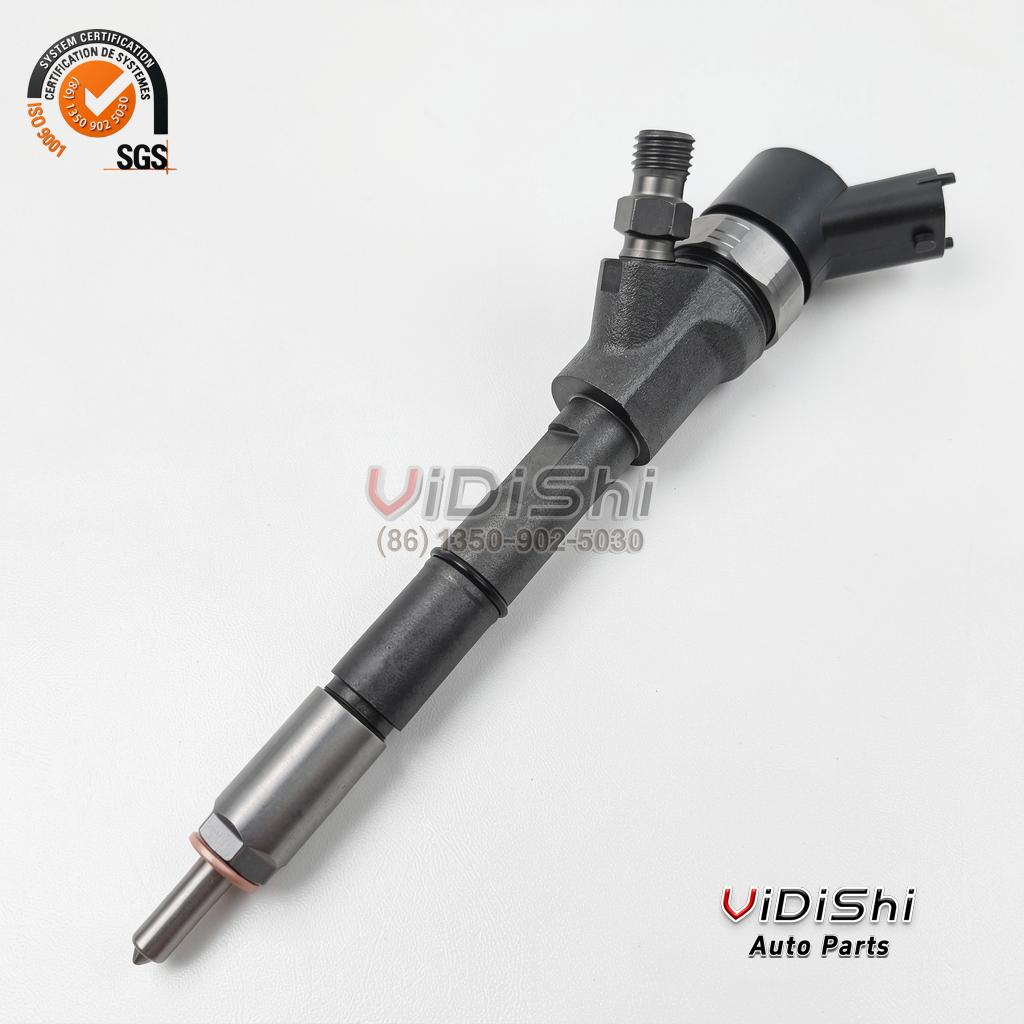
Distributors serving plant fleets will also find this line sits cleanly beside the wider injector range on this site, and the commercial mechanics of an ongoing account — price reviews, mixed containers, document handling — are described on the partner page. A parts distributor holding this number against an enquiry can quote from this page without waiting for us, and every unit that ships carries the same etchings shown in the photographs above.
Packaging, shipping and lead time
How a batch of injectors is packed, and what to expect on an export order.
| Single package size | 30 × 10 × 20 cm |
| Single gross weight | 3.000 kg |
| Minimum order | 4 pcs |
| Protection | Nozzle tip and valve end protected in transit, boxed individually, tray-packed |
| Freight modes | Courier, air and sea |
| Documentation | Commercial invoice, packing list, HS code |
| Core return | Not required |
The dimensions above are the packed export figures for a single injector in its own carton. We do not list a bare part size or a bare part weight, because no source we can trust gives one for this injector, and a specification table padded with approximations helps nobody. Lead time is quoted per order and depends on quantity and on what else is on the same shipment. For export shipping of fuel system parts, every order leaves with its paperwork in place — commercial invoice, packing list and HS code. Read our shipping information for freight options, and track your order once it ships.
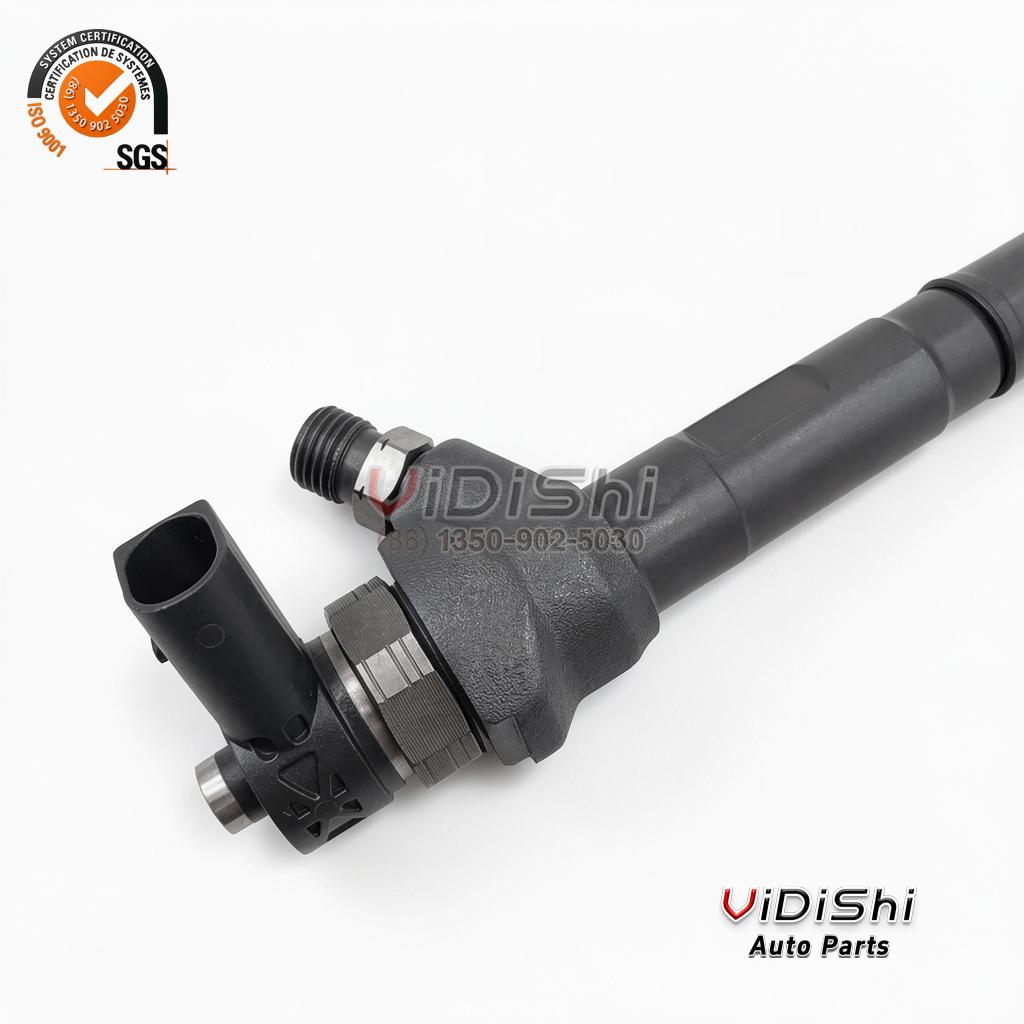
A trade order is packed the way the two photographs show it: units tray-packed in bulk, then grouped into dispatch sets per line so a mixed container can be broken down at the receiving end without a recount. Nozzle tips and valve ends are protected individually before the tray closes, because a damaged tip is the one packaging failure that costs a whole injector rather than a box. If your receiving process needs a different pack — labelled per engine, split per machine or boxed for retail — say so at quote stage and we pack to it.
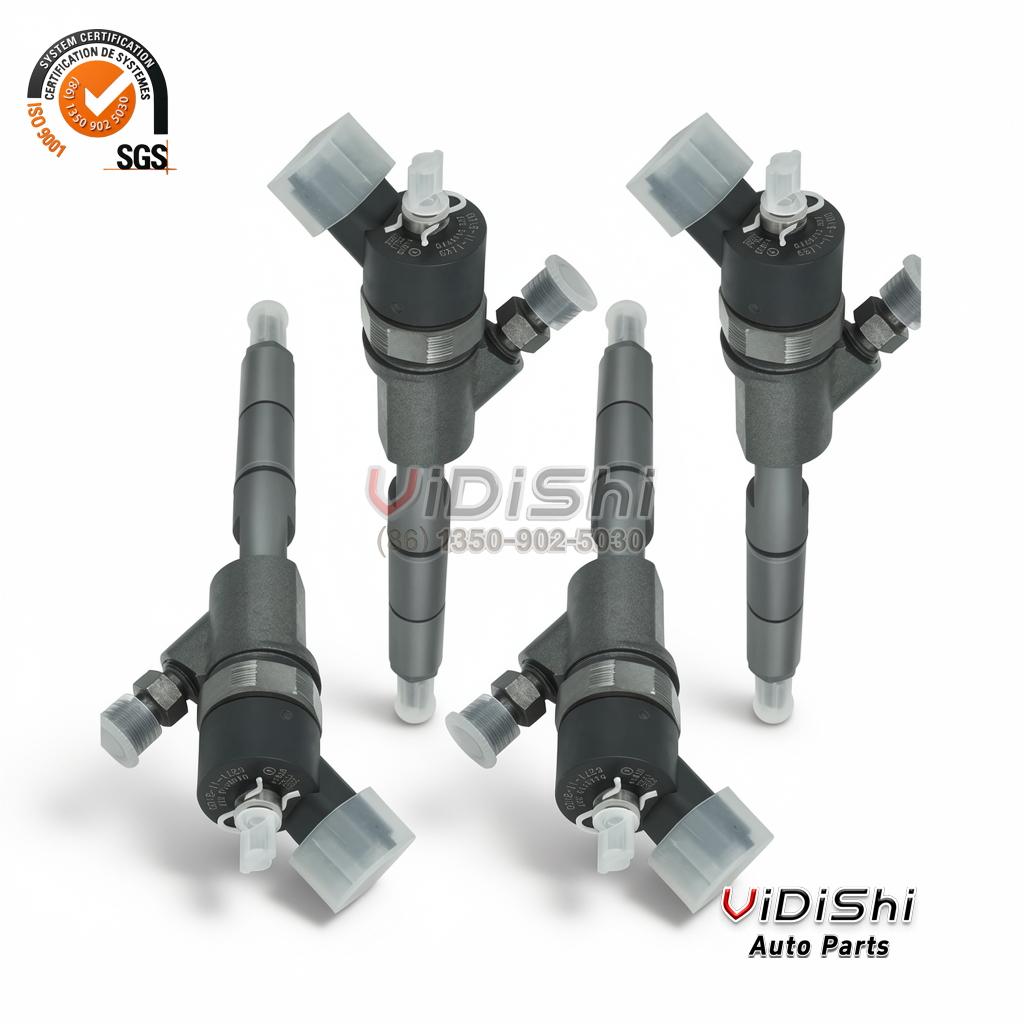
Where a shipment is consolidated with other engine lines, the dispatch sets are the unit of account: each set carries its own count and its own label, so the paperwork at the destination matches what is actually on the pallet. That is the part of fuel system exporting that generates the most disputes when it is done loosely, and it is worth agreeing before the order rather than after it.
Quality checks before an injector leaves us
How the 0445110307 is treated before it is packed for export.
An injector is a small part with a disproportionate effect on how an engine runs, so this line is checked at unit level rather than by sample. Every batch passes an incoming check for the injector number and the bracketed code on the hex, an inspection of the nozzle tip and the valve end, a confirm that the sealing surfaces are clean and undamaged, and a packed-weight confirmation against the documented figure. The supplied photography carries an SGS ISO 9001 system-certification badge in the corner; we record that as a supplier statement rather than as a certificate we issue. Rather than publish claims we cannot verify, we tell you how the part is inspected and let your own leak-off bench be the judge.
0445110307 FAQ
The questions buyers ask most about this injector and the numbers it carries.
Is 0445110307 a genuine Bosch part?
No. The 0445110307 injector we supply is a Vidishi Auto compatible replacement. It is not a genuine Bosch product, not a dealer-boxed part and not a Komatsu original. We quote the Bosch number and the Komatsu and Zexel cross references so you can match the injector you are replacing, and we say plainly what we ship before the order is placed. If you specifically need a dealer part, that comes through the original equipment network rather than from us.
What exactly is 0445110307?
It is a complete solenoid common rail injector of the CRI2 generation, used on Komatsu SAA4D95LE-5 family diesel engines. One part carries the injector body, the solenoid valve and the nozzle, and it fits straight into the cylinder head as a unit. It is not a nozzle on its own and not a valve on its own, and it is not listed here against any other injector number. If your machine runs a SAA4D95LE-5 engine and the old injector reads 0445110307, this is the matching part.
What does 0445110307 fit?
The published applications are Komatsu SAA4D95LE-5 diesel engines of about 3.3 litres, as fitted in excavators and loaders such as the PC78-8, PC130-8, PC138US-8, WA100M-6 and D31, with SAA4D95LE-5 appearing as the engine label in reseller fitment data. Some catalogues also carry truck applications for this number; we do not assert those without the engine plate. Send the engine code plate and the number off the injector you are removing and we confirm the match in writing before anything is invoiced.
Is 0445110307 the same as Komatsu 6271-11-3100?
They are cross-referenced numbers for the same injector rather than two different parts. 0445110307 is the Bosch number; 6271-11-3100 is the Komatsu equipment number that published cross-reference data gives for it, and 107750-0610 is the matching Zexel number. If your parts book, your invoice or the etching on the old injector carries any of these, they point at the same unit, and we can quote against whichever number you hold.
Is this the nozzle or the valve on its own?
No, and the distinction matters. This page supplies the complete injector assembly: body, solenoid valve and nozzle together, exactly as the engine takes them. Component numbers for the nozzle and the valve are not published on this page, because the catalogue claims we could find for them are single-source and we do not pass those on as fact. If you need a nozzle alone or a valve alone, those are separate parts with their own pages, and we will route you there rather than guess a number.
What are the symptoms of a faulty injector on a SAA4D95LE-5?
A failing injector usually announces itself through the cylinder it feeds. Watch for hard starting, black or grey smoke under load, a rough idle, a loss of power, higher fuel consumption and a misfire that no ignition work cures. The workshop test that settles it is a leak-off test: compare back-leak volumes cylinder by cylinder, and the injector returning clearly more than its neighbours is the one to replace. Low rail pressure on live data can point the same way, but it can equally point at the supply side, so measure before ordering.
Do I need to code the injector after fitting?
Yes, where the engine expects it. Common rail injectors of this generation carry a trim code, and the supplied units show a bracketed three-digit code etched beside the part number. Many controllers want that code written in so fuel delivery is balanced cylinder to cylinder, and a workshop with the correct diagnostic tool does it in minutes. Confirm the code your engine expects when you order, and program the new code after fitting. Skipping the step is a common cause of a rough running engine after an otherwise correct injector replacement.
How do I confirm the right injector before ordering?
Read the number on the injector you are removing; the hex etching on ours carries it in full, together with the code in brackets. Photograph the engine code plate as well, because engine families run several injector numbers across their years and ratings. Send us the number, the plate photograph and your machine details, and we reply with a written match confirmation before the order is invoiced. The check costs nothing, and it is the step that prevents a wrong injector crossing a border to reach you.
How many do I have to order, and what is the minimum?
The minimum order is 4 pcs, so a single machine repair is covered without buying stock you do not need. Order one injector per cylinder, and confirm with us how many your engine takes before the invoice is raised. There is no core return and no core charge with our supply, because we sell new compatible injectors rather than exchange units. Larger quantities and mixed orders travel on the same export paperwork, and we supply workshops, plant fleets and parts distributors from the same line.
What is the lead time and how does it ship?
Lead time is quoted per order rather than promised as a fixed number of days, because it depends on the quantity and on the other lines travelling in the same shipment. Each injector is boxed individually at 30×10×20 cm and 3.000 kg gross per package, with the nozzle tip and valve end protected for transit. Orders ship by courier, air or sea with a commercial invoice, a packing list and HS code documentation. Ask for a delivery time against your destination and we put it in writing with the quote.
What warranty comes with the injector?
A 12-month warranty against manufacturing defects at unit level. It covers an injector that arrives out of specification or fails early because of how it was made. It does not cover damage from contaminated fuel, from incorrect fitting, from reusing old sealing washers, or from a fault elsewhere in the fuel system, and it does not extend to labour or to the machine. It is our own supplier warranty, not a Bosch or Komatsu warranty. If there is a claim, send the order reference and your leak-off readings and we confirm the next step against our returns terms.
Can this injector be fitted in a workshop without special tools?
The mechanical swap is standard practice: release the fuel pressure, keep the well spotlessly clean, lift the old injector out, and fit the new one with a fresh copper washer and new O-rings rather than reusing the old ones. Torque to the figure for your engine, because the clamp load belongs to the machine, not to the part. Then do the electronic half: write the trim code where the controller expects it, prime the system, and check idle and load behaviour on live data before the machine goes back to work.
Related pages
The pages around this injector on one site — the common rail range, the reference material behind the numbers, and the fault-finding pages that explain the circuit it works in.
Technical support and how to order
Send us the number off the old injector and your engine plate and we will confirm the part.
Support is not an add-on on this line — it is how most of these orders get placed correctly. It costs nothing before you buy: send the number read off the injector you are removing, the machine details and a photograph of the engine plate, and we check the whole set against what we supply before quoting. That last item is the one people skip, and it is the one that matters most here, because engine families run several injector numbers across years and ratings. Support continues after delivery: coding questions, fitting questions and warranty claims all reach the same team, and the person who confirmed your fitment is the person who answers if something is not right.
Supplier note. WholesaleAutoPartsDirect is an independent supplier of compatible automotive parts and is not affiliated with, endorsed by or acting as an agent of Bosch or of Komatsu. Brand names and part numbers are used for reference and fitment only.
Reviews